Color Game Perya Technique: Sinubukan Namin ang Mga Sikat na Diskarte sa 2 Milyong Roll
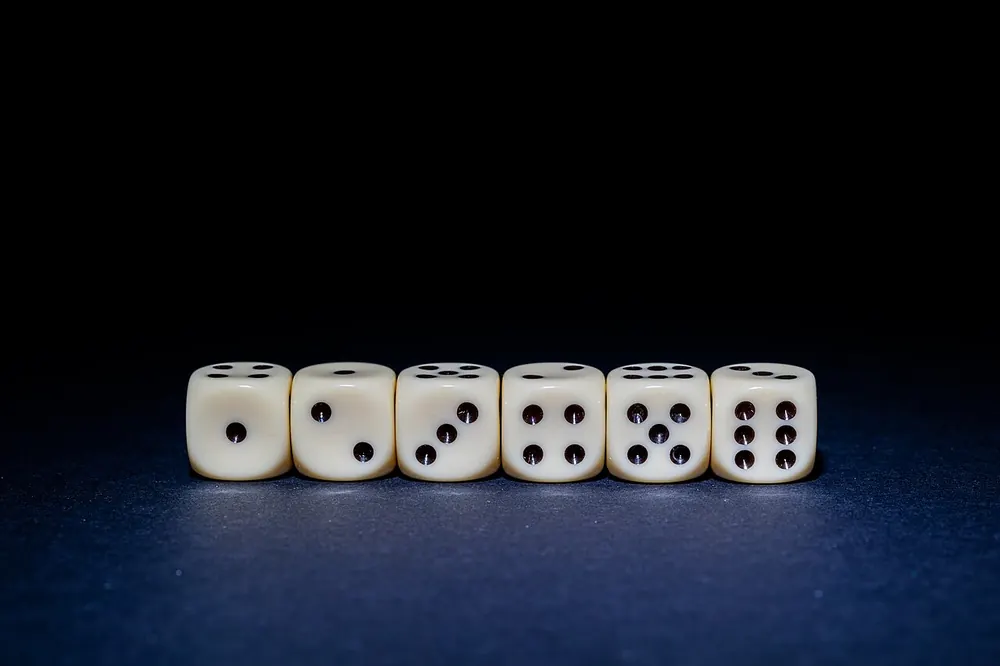
Every fiesta season, the same color game "techniques" make the rounds: bet the colour that keeps coming out, bet the colour that has not appeared, follow the last roll, cover two colours, double up after every loss. Ang dami ring nagbebenta ng "sure technique" sa Facebook at TikTok. Instead of just saying they don't work, we tested them.
We wrote a simple computer simulation of the classic perya color game (three fair dice, six colours, paying 1:1, 2:1 and 3:1 for one, two or three matches) and ran each technique over two million rolls. This page shows the results, explains why they came out that way, and covers the physical "techniques" people talk about, such as reading the throw. If you want the basics of the game and its payouts first, read our color game tips and tricks guide; for live games in general, our live casino Philippines guide.
18+/21+. Crypto only. Ad: we may earn a commission. Play responsibly. October 2026
Paano namin ginawa ang test
The simulation rolled three virtual fair dice, each face equally likely, two million times. Before each roll, every technique chose its colour or colours using only information available at the time, such as how often each colour had appeared in the previous 30 rolls. Every bet was P100 on a colour, paid at the standard 1:1 for one match, 2:1 for two and 3:1 for three. We then measured the average return per P100 bet for each technique.
Two million rolls is far more than anyone plays in a lifetime of fiestas, which is the point: with that many rolls, luck evens out and you see what each technique really does. The theoretical house edge for any single-colour bet in this game, with fair dice, is about 7.87% (a loss of P7.87 per P100 on average).
Ang resulta: lahat ng technique, halos pareho ang talo
| Technique | How it picks a colour | Average result per P100 bet |
|---|---|---|
| Fixed colour | Always the same colour | −P7.96 |
| "Hot" colour | The colour seen most in the last 30 rolls | −P7.83 |
| "Cold" colour | The colour seen least in the last 30 rolls | −P8.00 |
| Repeat last | A colour that showed on the previous roll | −P7.90 |
| Two colours | Always cover two colours | −P7.94 per P100 bet |
| After triple | After a triple, bet that same colour | −P8.22 (smaller sample) |
Every technique landed within a fraction of a peso of the theoretical −P7.87. The small differences between them are random noise: run the simulation again with a different seed and the order shuffles. The after-triple figure comes from far fewer bets, because triples only occur about once every 36 rolls, so it is noisier still.
In plain terms: choosing your colour by any of these methods is the same as choosing it randomly. None of them changes the odds.
Bakit ganito ang resulta: walang memorya ang dice
Each roll of fair dice is independent. The dice do not know that red appeared five times in a row, or that green has not appeared for twenty rolls. The probability that any one die shows your colour is always 1 in 6, and the chance that at least one of three dice shows it is always 91 in 216, about 42%, whatever happened before.
Our brains are built to see patterns, so streaks feel meaningful. In a truly random sequence, streaks are not only possible but expected. Over 30 rolls, it is completely normal for one colour to appear much more often than another purely by chance. "Hot" and "cold" colours are real in the sense that they happened; they are not real in the sense of predicting what comes next.
This idea, that a random event is "due" after not happening for a while, is known as the gambler's fallacy. The opposite belief, that a streak will continue, is sometimes called the hot-hand fallacy when applied to random games. Both feel convincing at the stall, and both are wrong for fair dice.
"Dalawang kulay" technique: bakit hindi nakakabawas ng lugi
Covering two colours feels safer because you win something more often. The simulation shows the average loss per P100 bet stays the same, around 7.9%, but now you are placing two bets per roll, so your loss per roll roughly doubles. You lose more slowly per bet and faster per roll.
The same holds for three, four, five or six colours. More colours smooth out your results from roll to roll, which can make the session feel calmer, but the total amount you are expected to lose depends only on how much you bet in total, not on how you spread it. Covering all six colours, as our tips guide shows, can only break even or lose on each roll.
Martingale (doble pagkatalo): ano ang nangyari sa simulation
Doubling after every loss is the most common "money technique" in perya and online color games. We simulated 20,000 separate nights at the perya. Each night started with P1,000, a starting bet of P20 on one colour, up to 200 rolls, doubling after every loss and returning to P20 after any win. If the next doubled bet was more than the remaining money (or above a P5,000 table limit), the player went back to P20 if they could afford it.
| Approach (20,000 nights each) | Nights ending with more than P1,000 | Average money at end of night |
|---|---|---|
| Flat P20 per roll | about 15.5% | about P688 |
| Martingale from P20 | about 14.3% | about P458 |
In our Martingale runs, about 79% of nights ended with the player essentially wiped out (less than P20 left). Martingale did not increase the chance of a winning night; it slightly reduced it, and it made the average night much more expensive because it pushed far more money through the game. A run of six or seven straight losses, which is common when you lose a single-colour bet about 58% of the time, turns a P20 starting bet into P1,280 or P2,560.
The flat-betting result is also instructive. Two hundred rolls at P20 is P4,000 of total betting. At a 7.87% edge, the expected loss is about P315, which matches the average ending of roughly P688 out of P1,000. That is what an evening of color game costs on average, and it is predictable enough that you can budget for it.
Iba pang money "techniques": Paroli, d'Alembert at Labouchere
Other betting systems change your stakes in different patterns:
- Paroli (doble kapag panalo). Increase after wins, reset after losses. It limits big losses but rarely lets wins run long enough to matter.
- d'Alembert. Increase by one unit after a loss, decrease by one after a win. A gentler version of Martingale with the same underlying edge.
- Labouchere (cancellation). Write a sequence of numbers and bet the sum of the first and last, crossing them off when you win. It feels structured, but long losing runs make the sequence grow quickly.
Mathematically, no staking system changes the house edge of the bets you place, because each bet carries the same 7.87% edge. Systems change the pattern of wins and losses and the total amount you bet. Systems that make you bet more in total make you lose more on average.
Physical techniques: "pagbasa" sa dice at sa hagis
Some technique sellers claim you can read the dice: watch how the operator drops them down the chute, how the dice bounce, or which face is on top before the throw. With a properly built chute or shaker and fair dice, the dice bounce many times, and tiny differences in each throw lead to unpredictable outcomes. That is exactly why chutes and shakers are used.
If an operator really could control or predict the result by the way they throw, the game would not be fair, and the person with the advantage would be the operator, not you. Claims that you can learn to read the throw are, at best, pattern-spotting in randomness; at worst, they are used to draw players into games where the operator is controlling outcomes.
What you can observe usefully is whether the setup looks fair: dice that tumble freely down a long chute or are shaken in a closed box are harder to manipulate than dice dropped from a hand or rolled a short distance on a flat surface. Damaged, uneven or unusually heavy dice are red flags. Our tips guide lists more warning signs.
Iba pang "technique" na naririnig sa perya
"Swerte ang oras" (lucky hours). Some believe the game "pays more" late at night or early in the evening. With fair dice, the time of day has no effect on the probabilities. What does change late at night is your judgement: tired players bet more and stop less.
"Taya kapag kaunti ang tao." The idea that operators let players win when the crowd is thin. On a fair game, the number of players does not change the dice. If outcomes really did change with the crowd, the game would be manipulated, which is a reason not to play.
"Malaking taya sa huling roll." Saving a big bet for the end to "bawi" is chasing by another name. The last roll has exactly the same odds as the first.
"Sundan ang mananalong kapitbahay." Copying someone on a winning streak feels smart, but their streak is as random as anyone's. You simply inherit their luck's next roll, which is the same 42% chance of at least one match.
Every one of these comes back to the same truth the simulation showed: with fair dice, nothing you can observe before a roll changes what the roll will be.
18+/21+. Crypto only. Ad: we may earn a commission. Play responsibly. October 2026
Mga "technique" na binebenta online: paano makilala ang scam
Online and livestream color games have spawned a market for paid "techniques," "signals" and "VIP groups." Common patterns:
- A seller shows screenshots of big wins and offers a technique or a group for a fee.
- The group posts "signals" (which colour to bet) before each round of a livestream game.
- When signals lose, the seller blames you for betting too late or too little, and offers a "premium" tier.
- Some sellers are paid by the game operator to recruit players, earning from your losses.
Our simulation shows why these signals cannot work on a fair game: any rule for picking colours performs the same as random picks. And if a game is not fair, a signal seller is more likely to be working with the operator than against it. Do not pay for techniques or signals.
Bakit parang gumagana ang technique minsan
People who sell or share techniques are not always lying about their wins. In short sessions, results swing a lot. In our flat-betting simulation, around 15% of nights ended with more money than they started with. If thousands of people try a "technique," hundreds will have a winning night and some will have several in a row by pure chance. Those are the people who post about it. The many who lost with the same technique rarely share their results. That is survivorship bias, and it is how ineffective techniques stay popular.
A fair test needs a lot of rolls and an honest record of every bet, not a highlight reel. That is what a simulation provides, and it is why we ran one. If someone offering a technique cannot show you an unedited record of hundreds of consecutive bets, losses included, you have no reason to believe their claims, and plenty of reasons to keep your money.
Magkano ang average na gastos ng isang gabi?
Because the edge is fixed, you can estimate the average cost of a night in advance from just two numbers: your stake per roll and how many rolls you play. These are long-run averages; any single night will land above or below them.
| Stake per roll | 50 rolls | 100 rolls | 200 rolls |
|---|---|---|---|
| P10 | about P39 | about P79 | about P157 |
| P20 | about P79 | about P157 | about P315 |
| P50 | about P197 | about P394 | about P787 |
| P100 | about P394 | about P787 | about P1,574 |
Seen this way, the color game is like any paid attraction with a price tag, only the price is hidden in the odds. Choosing a smaller stake or fewer rolls is the one decision that reliably lowers what you pay.
Ano ang hindi masasabi ng simulation
Our simulation assumes fair dice and honest payouts. Real stalls and online games may not meet that standard. If dice are weighted or the roll is controlled, the operator's edge can be much larger than 7.87%, and no technique can predict or overcome manipulation you cannot see. The simulation therefore shows the best case for players. In an unfair game, every technique does worse. That is why checking the setup, and walking away when in doubt, matters more than any colour-picking method.
Ang "near miss" effect
A big reason techniques feel like they almost work is the near miss. Two dice show the colours next to yours, or your colour appears on the roll right after you switched. These moments feel like evidence that you were close to cracking the pattern. They are simply what randomness looks like: with six colours and three dice, something close to your choice happens on most rolls. Near misses keep players betting because they feel like progress. Recognising them as normal noise makes it much easier to stop on plan.
Ang tanging technique na gumagana: kontrolin ang pera mo
Since no method of picking colours changes the odds, the only things you control are how much you bet, how fast, and when you stop. Practical rules:
- Budget the night like entertainment. If an evening of 200 rolls at P20 costs about P315 on average, decide whether that is worth it to you, the same way you would for a movie or a meal out.
- Bet flat. The same small stake every roll keeps losses close to the expected amount and avoids the blow-ups systems create.
- Play fewer rolls. Your expected loss is about 7.87% of everything you bet. Skip rolls, take breaks, watch others.
- Set a stop-loss and a win goal. Leave when the budget is gone, and consider leaving when you are up a decent amount, before the edge grinds it back.
- Never chase. Doubling up to win back losses is Martingale under another name.
- Avoid informal online games. Livestream color games paid through personal e-wallets add scam risk on top of the house edge.
Kung gusto mong subukan ang simulation mismo
If you are curious, you can do a small version with real dice at home, no money involved. Roll three dice 100 times, pick a colour (or number) each time using your favourite technique, and keep score with the standard payouts in imaginary pesos. Then do it again picking randomly. With only 100 rolls, results will vary a lot, which is itself a lesson: short sessions are dominated by luck. Combine the scores of several family members over several evenings and you will see both approaches drift toward the same losing average. It is a good way to teach teenagers why games of chance favour the house before they encounter online betting apps.
Legal at kung saan naglalaro
Gambling in the Philippines is regulated, and games not authorised by the proper authority are generally treated as illegal under laws including Presidential Decree 1602. Whether a particular perya stall is authorised depends on local permits. Informal online color games run through social media and personal e-wallets are a particular legal and financial risk. You must be at least 21 to gamble in the Philippines.
If you enjoy quick dice-style games and prefer a licensed online casino with published rules, some casinos offer dice games with provably fair mechanics that let you verify each result. Cloudbet's casino includes provably fair games and live dealer tables; we did not find the traditional perya color game in its lobby, so check what is actually offered and read each game's rules. Cloudbet is licensed in Curaçao and is not licensed by PAGCOR, so Philippine regulators cannot help with disputes, and its terms exclude residents of jurisdictions that prohibit crypto gambling.
Bottom line
We tested the most popular color game techniques over two million simulated rolls, and every one of them lost at essentially the same rate as the game's built-in edge of about 7.9%. Martingale did not improve the chance of a winning night and made the average night far more expensive. Reading the throw does not work on a fair setup, and paid signals are a scam pattern. The only technique that genuinely helps is money control: flat small bets, fewer rolls, a firm stop and no chasing. If the color game or any gambling stops being fun, our responsible gambling page has Philippine helplines.
Mga Madalas Itanong (FAQ)
May technique ba para manalo sa color game perya?
Not with fair dice. In our two-million-roll simulation, hot colour, cold colour, repeat-last, two-colour and after-triple techniques all lost about P7.9 per P100 bet, the same as the game's house edge.
Gumagana ba ang Martingale sa color game?
No. In 20,000 simulated nights, Martingale slightly reduced the chance of a winning night and left players with much less money on average than flat betting, with most nights ending nearly wiped out.
Puwede bang basahin ang hagis ng dice?
With a proper chute or shaker and fair dice, outcomes are unpredictable. If someone could control the result by the throw, the game would not be fair, and the advantage would belong to the operator.
Legit ba ang binebentang color game technique o signals?
No method of choosing colours changes the odds on fair dice. Paid techniques and signal groups are a common scam pattern; do not pay for them.
Bakit may mga nananalo gamit ang technique?
Short sessions swing a lot by chance; roughly 15% of our simulated nights ended ahead. Winners post about it, losers rarely do. That survivorship bias keeps ineffective techniques popular.
Ano ang pinakamagandang paraan para maglaro?
Treat it as paid entertainment: flat small bets, fewer rolls, a stop-loss and win goal, and no chasing. Avoid informal online games paid through personal e-wallets.
18+/21+. Crypto only. Ad: we may earn a commission. Play responsibly. October 2026
18+/21+. Crypto only. Ad: we may earn a commission. Play responsibly. October 2026
If gambling stops being fun, call PAGCOR's free 24/7 National Problem Gambling Helpline at (02) 8248-9568 (+63 2 8248 9568), or visit npgh.ph. Source: PAGCOR Responsible Gaming.