Dragon Tiger Baccarat Strategy: What Actually Works (and What Doesn't)
Welcome bonus for new players + fast crypto payouts. Just helping a brother out.
18+/21+. Crypto only. Ad: we may earn a commission. Play responsibly. October 2026
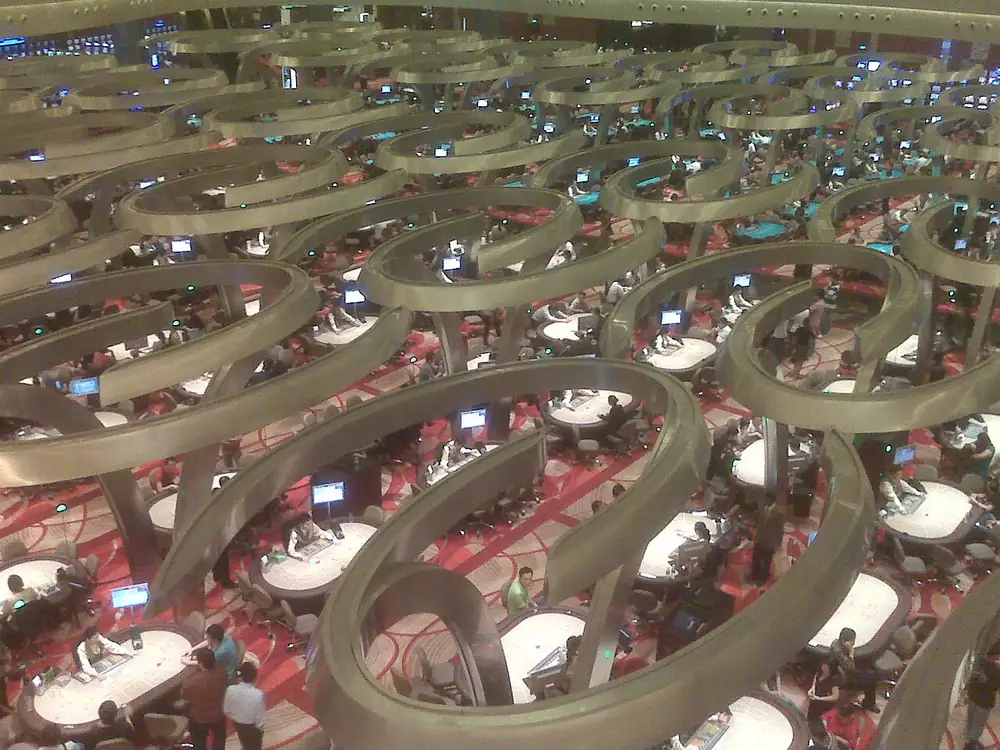
Dragon Tiger is baccarat stripped down to one card each, so any "strategy" is really about three things: picking the bet with the smallest edge, sizing your stakes so a cold run doesn't wipe you out, and knowing when to stand up. No system changes the card that comes out of the shoe.
This guide skips the rules recap (see our Dragon Tiger rules guide for that) and goes straight to decisions. If you want to try live tables, our live casino Philippines guide covers where and how.
18+/21+. Crypto only. Ad: we may earn a commission. Play responsibly. October 2026
The short answer
- Bet Dragon or Tiger only. Both carry the same edge, about 3.7% at a table that takes half your stake on a tie.
- Never bet the Tie at 8:1. It costs you about a third of every peso you put on it.
- Prefer tables where a tie returns half your Dragon/Tiger stake. Tables that take the whole stake are noticeably worse.
- Use flat bets of 1% to 2% of your session money. Progression systems change how your results feel, not what you lose on average.
- Decide your stop-loss, your stop-win and your time limit before the first hand.
Why strategy here is mostly bet selection
In regular baccarat, the Banker hand gets a small edge from the drawing rules. Dragon Tiger has no drawing rules at all. One card goes to Dragon, one to Tiger, highest rank wins, and the shoe has no memory you can use in a practical way. That means the two main bets are perfectly symmetrical. Choosing Dragon over Tiger, or following the "road," cannot move your odds.
What you can control is which betting box you use, which table rules you accept, how big each bet is, and how long you play. Those four choices decide almost everything about your results. Get them right and Dragon Tiger is a cheap, fast bit of fun. Get them wrong and it becomes one of the most expensive games on the floor.
Ranking every bet from best to worst
The numbers below assume an 8-deck shoe, the standard at most live tables. With 32 cards of each rank in 416 cards, a tie (same rank on both sides) happens about 7.47% of the time, and Dragon and Tiger each win about 46.27%.
| Bet | Typical payout | House edge | Verdict |
|---|---|---|---|
| Dragon or Tiger (half back on tie) | 1:1 | about 3.73% | Best available |
| Dragon or Tiger (lose all on tie) | 1:1 | about 7.47% | Avoid this table if you can |
| Big / Small on one side (7 loses) | 1:1 | about 7.69% | Poor |
| Odd / Even on one side (7 loses) | 1:1 | about 7.69% | Poor |
| Tie | 11:1 | about 10.4% | Bad |
| Suited Tie | 50:1 | about 14% | Bad |
| Tie | 8:1 | about 32.8% | Worst bet on the table |
The gap is huge. A ₱100 Dragon bet at a half-back table costs you about ₱3.73 on average. The same ₱100 on an 8:1 Tie costs about ₱32.80. Every strategy tip that follows depends on staying in the top row.
How we got those figures
A tie needs both cards to share a rank. The first card can be anything; the second must match it, and 31 of the remaining 415 cards do. That's 31/415, or 7.47%. Split the rest evenly and each side wins 46.27%. On a half-back table your expected result on a ₱1 Dragon bet is 0.4627 − 0.4627 − (0.0747 ÷ 2) = −0.0373, so 3.73%. If the table keeps your whole stake on a tie, the loss doubles to 7.47%. For an 8:1 Tie, you win 8 units 7.47% of the time and lose 1 unit the rest: 8 × 0.0747 − 0.9253 ≈ −0.328.
Strategy 1: Read the table rules before you sit
This is the single most valuable habit. Live studios usually show the rules in an info panel. Look for three lines:
- What happens to Dragon/Tiger bets on a tie. "Lose half" is good; "lose all" doubles your cost.
- What the Tie pays. 11:1 is less bad than 8:1, but still not worth it.
- Minimum and maximum bets. A ₱50 minimum makes sense for a ₱5,000 session; a ₱500 minimum doesn't.
If you can't find the tie rule, assume the worse one and move on. Switching tables takes thirty seconds and can halve your expected loss.
Strategy 2: Size bets from your session money
Dragon Tiger rounds are quick, often 25 to 40 seconds on a live table, so you can play 80 to 100 hands an hour. That speed is the real danger. Use a fixed fraction of your session money per hand.
| Session money | 1% flat bet | 2% flat bet | Expected cost per 100 hands at 1%* |
|---|---|---|---|
| ₱2,000 | ₱20 | ₱40 | about ₱75 |
| ₱5,000 | ₱50 | ₱100 | about ₱187 |
| ₱10,000 | ₱100 | ₱200 | about ₱373 |
| ₱25,000 | ₱250 | ₱500 | about ₱933 |
*Dragon/Tiger bets at a half-back table. Real sessions swing far above and below these averages, but over many sessions this is the price of the entertainment.
At 1% per hand, a run of 15 straight losses still leaves you with 85% of your money. At 10% per hand, a few bad hands can end the night. Small bets don't make you a winner; they make the session last long enough to enjoy.
Strategy 3: Treat progression systems as entertainment, not edge
You'll see Martingale, Paroli, 1-3-2-6 and Fibonacci recommended for Dragon Tiger. Each one rearranges the same negative expectation. Here's how they behave in practice.
Martingale (double after a loss)
You win small amounts often, then occasionally hit the table maximum or run out of money during a losing streak. With a ₱50 base bet, seven losses in a row means the next bet is ₱6,400, and you've already lost ₱6,350. On an even-ish bet with ties counted as partial losses, a streak of seven or more turns up more often than most players expect over a few hundred hands. Martingale feels safe until the one session it isn't.
Paroli (double after a win, reset after three)
Paroli risks your base bet and lets winnings ride. Losses stay small and the occasional three-win streak gives a nice bump. It's the gentlest system, but the house edge on every hand is unchanged.
1-3-2-6
Another positive progression. You bet 1, 3, 2, then 6 units as long as you keep winning. It caps your downside per cycle at two units. Fine as a way to make sessions more exciting; not a way to beat the game.
Fibonacci
A slower negative progression than Martingale. The bets grow more gradually, but a long losing run still forces large stakes.
Bottom line: if a system helps you stick to a budget, use Paroli or 1-3-2-6. Avoid any system that increases your bet after losses.
Strategy 4: Forget the roads, mostly
Live tables display a scorecard of past results, often styled like baccarat's Big Road. Players chase streaks ("Dragon has won five, ride it") or bet against them ("Tiger is due"). Neither works, because each hand is drawn from a huge shoe where one previous result barely changes the next.
The scorecard is still useful for one thing: tracking your own discipline. If you notice you're betting bigger after every Tiger streak, that's a signal to slow down.
18+/21+. Crypto only. Ad: we may earn a commission. Play responsibly. October 2026
Strategy 5: Card counting, honestly
Dragon Tiger is sometimes called "countable" because ties and card ranks are easy to track. In theory, if many high cards have come out, the remaining shoe favours low cards, and side bets like Big/Small shift slightly. In practice, online live tables shuffle early (often after about half the shoe), use 8 decks, and limit side-bet sizes. The edge a perfect counter could find appears rarely and is too small to cover the time and risk. For home players, counting is a fun mental exercise, not a plan.
Also note that ordinary RNG (non-live) Dragon Tiger games reshuffle every hand. Counting has zero value there.
Strategy 6: Plan the session in three numbers
Before you start, write down:
- Stop-loss: the amount you can lose without it bothering you tomorrow. Many players use their whole session money; some use half.
- Stop-win: a point where you quit while ahead, for example +50% of your session money.
- Time limit: 30 to 60 minutes is plenty at live-table speed.
Most of the damage in fast games happens after a stop point is crossed. Setting it before you play takes the decision out of a heated moment.
A sample 45-minute session plan
| Step | What you do |
|---|---|
| 1 | Pick a live table with half-back ties and a ₱50 minimum. |
| 2 | Bring ₱5,000. Stop-loss ₱5,000; stop-win ₱2,500 profit; timer 45 minutes. |
| 3 | Bet ₱50 flat on Dragon or Tiger. Switch sides whenever you like; it makes no difference. |
| 4 | Skip every Tie, Suited Tie and Big/Small prompt. |
| 5 | When any limit is hit, stop and cash out or log off. |
At about 90 hands, the expected cost is around ₱170. Some nights you'll be well ahead, some well behind, but you won't have a disaster.
Common mistakes we see
- "Insurance" tie bets. Some players add a small Tie bet to cover their main bet. At 8:1 that's paying 32.8% for protection worth far less.
- Chasing after a tie. Losing half a stake to a tie feels unfair, so players double up. The tie rule is already in the house edge; doubling just adds risk.
- Betting both sides. Dragon and Tiger together guarantees you lose half of both stakes on every tie and win nothing otherwise.
- Playing too fast. Use the full betting window. Fewer hands per hour means a lower hourly cost.
- Treating bonuses as free money. Many casino bonuses count Dragon Tiger at a reduced rate toward wagering, or exclude it. Read the terms first.
Dragon Tiger vs baccarat for a strategy-minded player
If your goal is the lowest cost per hand, regular baccarat wins: the Banker bet carries about 1.06% and Player about 1.24%, against Dragon Tiger's 3.73% at best. Dragon Tiger's appeal is speed and simplicity. A reasonable approach is to play baccarat for longer sessions and Dragon Tiger for short, fun bursts. Our baccarat tips for beginners covers the baccarat side.
Crypto tables and fast withdrawals
On crypto casinos, Dragon Tiger is usually offered by live studios like Evolution and similar providers, with bets in USDT or BTC shown in peso-equivalent. Keep your session money in a stablecoin such as USDT so price swings don't add another layer of variance on top of the game.
Taglish recap
Sa Dragon Tiger, Dragon o Tiger lang ang tayaan, at piliin ang mesa na kalahati lang ang kinukuha kapag tie (mga 3.73% house edge). Huwag tumaya sa Tie sa 8:1, mga 32.8% ang talo diyan. Mag-flat bet ng 1-2% ng pera mo sa session, magtakda ng stop-loss, stop-win at oras. Walang sistema o roadmap na tatalo sa house edge.
Responsible play
Dragon Tiger moves quickly, which makes it easy to lose track of time and money. Only adults 21 and over may gamble in the Philippines, and PAGCOR rules bar students and government employees. If you're chasing losses, take a break. Free, confidential help is listed on our responsible gambling page.
Mga Madalas Itanong (FAQ)
Ano ang pinakamagandang strategy sa Dragon Tiger?
Tumaya lang sa Dragon o Tiger, sa mesa na kalahati ang ibinabalik kapag tie, at mag-flat bet ng maliit na bahagi ng bankroll.
Mas maganda ba ang Dragon kaysa Tiger?
Hindi. Pareho ang tsansa nila; mga 46.27% bawat isa sa 8 decks.
Is the Tie bet ever worth it?
Not really. At 8:1 the house edge is about 32.8%, and even at 11:1 it is about 10.4%.
Does Martingale work in Dragon Tiger?
It wins small amounts often but risks large losses during streaks. It does not remove the house edge.
Can you count cards in Dragon Tiger?
In theory a little, but live tables shuffle early and the edge is too small to matter in practice.
18+/21+. Crypto only. Ad: we may earn a commission. Play responsibly. October 2026
18+/21+. Crypto only. Ad: we may earn a commission. Play responsibly. October 2026
If gambling stops being fun, call PAGCOR's free 24/7 National Problem Gambling Helpline at (02) 8248-9568 (+63 2 8248 9568), or visit npgh.ph. Source: PAGCOR Responsible Gaming.