Lucky 9 Rules: Home Game, Casino Table and Pinoy Lucky Nine Explained
Welcome bonus for new players + fast crypto payouts. Just helping a brother out.
18+/21+. Crypto only. Ad: we may earn a commission. Play responsibly. October 2026
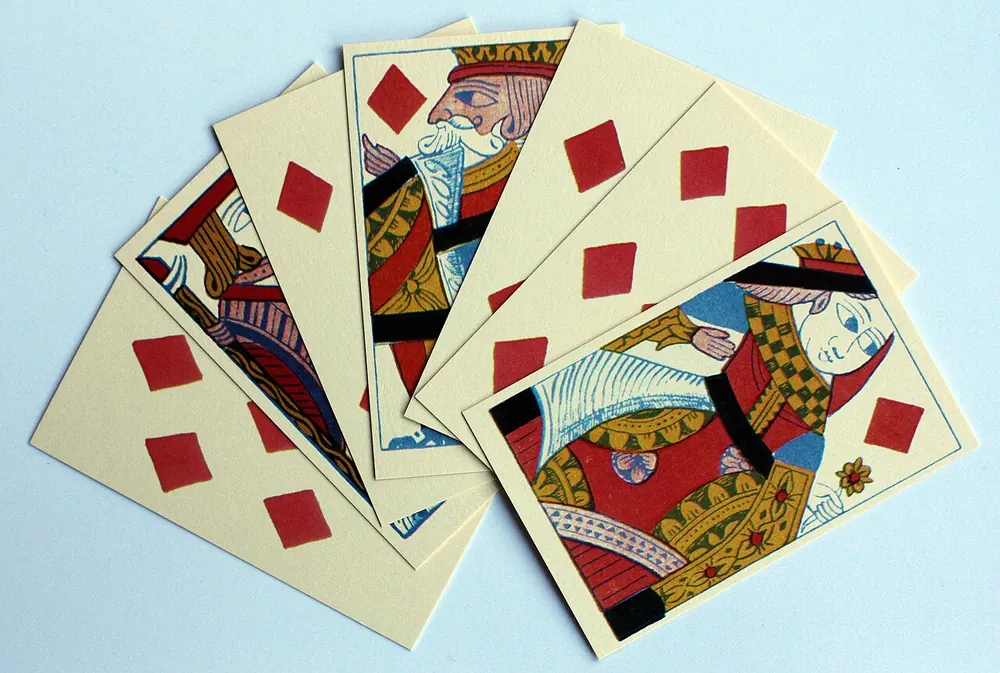
Lucky 9 is the card game of Filipino wakes, fiestas, barkada nights and break rooms. Everyone knows the goal, get as close to 9 as possible, but ask five tables for the exact rules and you'll get five answers. Is 8 a natural? Must you draw on 5? Does the banker draw last? Who pays on a tie?
This guide lays out the core rules everyone agrees on, the variations you'll meet, and the casino versions, with the math that shows which choices actually matter. If you know baccarat, our Lucky 9 vs baccarat comparison is a quick bridge. For online baccarat-style tables, see our online baccarat Philippines guide.
18+/21+. Crypto only. Ad: we may earn a commission. Play responsibly. October 2026
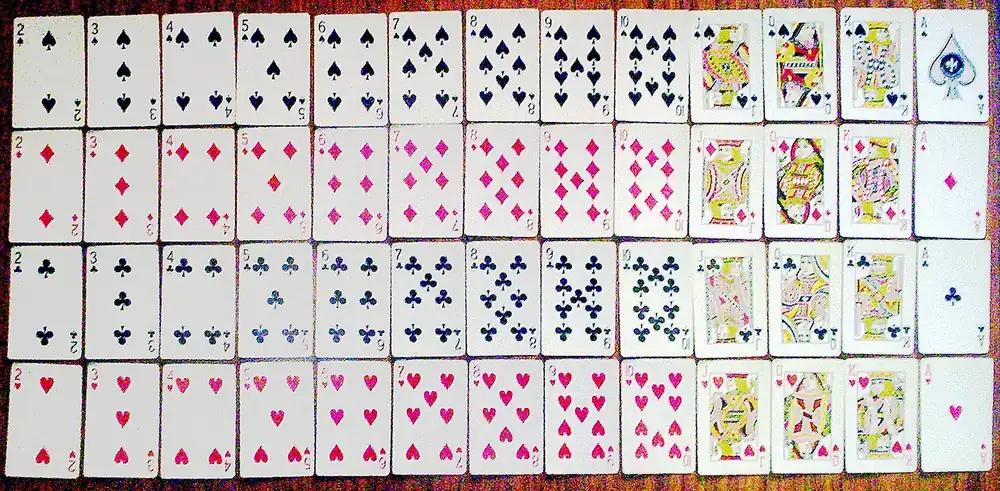
The core rules (the parts everyone agrees on)
- Deck: a standard 52-card deck, no jokers. Casinos use multiple decks.
- Card values: Ace = 1; 2 to 9 = face value; 10, Jack, Queen, King = 0.
- Scoring: add the cards and keep only the last digit. 7 + 6 = 13, which scores 3. 9 + King = 9. 5 + 5 = 10, which scores 0.
- Hand size: two cards to start, at most one extra card. No hand ever has more than three cards.
- Goal: finish closer to 9 than your opponent.
- Ties: usually a push (stand-off), with bets returned.
Scores can't go over 9, so there's no "bust" like in blackjack. A hand of 0 (often called "baccarat" or "bokya") is the worst score.
The home game: banker vs punters
In the classic home or fiesta version, one person is the banker (bangka) and everyone else is a punter (manlalaro). Each punter plays only against the banker, not against each other.
- Bets. Punters place bets in front of them, within limits the banker accepts.
- Deal. The banker deals two cards face down to each punter and to themselves.
- Naturals. Anyone with a two-card 9 (and in many groups, 8 as well) reveals it immediately. A punter's natural beats the banker unless the banker also has a natural of equal or higher value.
- Draw decisions. Going around the table, each punter decides whether to take a third card. In many groups the third card is dealt face up.
- Banker's turn. The banker decides last whether to draw.
- Showdown. The banker compares hands with each punter individually. Higher score wins even money; equal scores push.
- Rotation. The bank usually passes to the next player after a set number of rounds, when the banker chooses, or when someone gets a natural, depending on house rules.
Naturals: 9 only, or 8 and 9?
This is the most common rule difference. In the traditional form, only a two-card 9 counts as a natural, the "lucky 9" that gives the game its name. Many modern groups, influenced by baccarat, also treat a two-card 8 as a natural. Where both count, a natural 9 beats a natural 8, and equal naturals push. Some house rules also pay a bonus for a natural 9, for example 2:1 instead of 1:1. Agree on this before the first deal.
Drawing: optional or fixed?
In the traditional home game, drawing a third card is a free choice for both punters and banker. Some groups instead use a fixed rule borrowed from baccarat: draw on 0 to 5, stand on 6 or 7 (and 8 or 9 if not already a natural). Casino versions always use fixed rules for the house hand.
If your table allows a choice, the math gives a clear answer for most totals.
When should you draw? A math-backed table
We modelled a punter facing a banker who follows the common draw-on-0-to-5 habit, using a simplified infinite-deck model. Expected value is per peso bet, where +0.10 means you win 10 centavos per peso on average.
| Your two-card total | EV if you stand | EV if you draw | Better choice |
|---|---|---|---|
| 0 | -0.92 | -0.34 | Draw |
| 1 | -0.77 | -0.30 | Draw |
| 2 | -0.63 | -0.27 | Draw |
| 3 | -0.49 | -0.24 | Draw |
| 4 | -0.35 | -0.21 | Draw |
| 5 | -0.21 | -0.17 | Draw (close) |
| 6 | 0.00 | -0.13 | Stand |
| 7 | +0.29 | -0.06 | Stand |
| 8 | +0.57 | +0.01 | Stand |
| 9 | +0.86 | +0.07 | Stand |
The simple rule is the right one: draw on 0 to 5, stand on 6 to 9. On 5 the choice is close, and drawing is slightly better against this kind of banker. Standing on 6 is roughly break-even, which is why 6 feels like a coin flip at the table. The numbers shift a little with a single deck and with what you can see of other players' cards, but the rule holds as a strong default.
How often each two-card total appears
With a single 52-card deck, there are 1,326 possible two-card starting hands. Because sixteen cards are worth zero, a total of 0 is the most common start:
| Two-card total | Chance |
|---|---|
| 0 | 14.33% |
| 1, 3, 5, 7, 9 | 9.65% each |
| 2, 4, 6, 8 | 9.35% each |
So a natural 9 comes about once every ten hands, and if your table also counts 8, you'll see a natural roughly once every five hands. Any given player starts with 0 to 5, and should draw, about 62% of the time.
Tips for when you're the banker
As banker you act last, so use what you can see. In our model, against a punter who stood (meaning they had 6 to 9), these were the better choices:
- Banker 0 to 5: draw.
- Banker 6: draw. This surprises people, but against a punter who stood, 6 loses more often than not, and drawing improves your average.
- Banker 7, 8, 9: stand.
Against punters who drew, it depends on the face-up third card. A big third card (like 9 or 8 added to a low total) may give them a strong hand; a zero-value card often means they're still weak. With many punters showing different cards, you'll have to weigh the table as a whole, since you make one decision for all of them. When in doubt, the simple 0-to-5 rule is close to optimal.
Banker bankroll: the risk of covering everyone
The banker pays every punter who beats them. With eight punters betting ₱50 each, a bad round can cost ₱400 at once, even though the banker has a small edge. Before taking the bank, make sure you can cover several bad rounds in a row. Many groups cap the total the banker must cover, or let the banker "close" the bank when it's broken. Agree on that rule up front.
Why the banker has an advantage, and why rotation matters
The banker acts last. If punters' third cards are dealt face up, the banker sees which punters drew and what they got, then decides whether to draw. In our model, a banker who uses that information well against punters who follow the 0-to-5 rule gains an edge of about 1.6% of the amount bet. Against punters who make poor draw decisions, the edge is larger. Facing many punters at once multiplies the banker's action.
That's why fair home games rotate the bank. Over a night, everyone gets a turn at the advantage. If one person insists on being banker all night, they're quietly playing the house.
Common house-rule variations
- Natural 8 counts or not. See above.
- Bonus for natural 9. Some pay 2:1, occasionally more for three-card 9s of the same suit or specific combinations. Bonuses reduce the banker's edge.
- Third card face up or down. Face up gives the banker information; face down keeps decisions blind.
- Forced draw. Some groups require drawing on 0 to 4 or 0 to 5 with no choice.
- Banker wins ties. A few groups give ties to the banker. Since ties happen roughly 11% of the time, this hands the banker an edge of about 11% of every bet, which is huge, and should only be played if everyone openly agrees.
- Bank rotation trigger. After a fixed number of rounds, on a natural, or when the bank is broken.
- Maximum bets. Often capped at what the banker can cover.
Write the agreed rules down or say them out loud before playing. Most arguments at Lucky 9 tables come from rules nobody stated.
Worked hands (home game, 9 and 8 both natural)
Hand 1. Punter: 4 and 3 (7). Banker: King and 5 (5). Punter stands on 7. Banker draws: 2, making 7. Push.
Hand 2. Punter: 6 and 2 (8, natural). Banker: 3 and 4 (7). Punter reveals the natural and wins at once.
Hand 3. Punter: Queen and 4 (4). Punter draws: 5, total 9. Banker: 8 and Ace (9, natural). Natural 9 beats a three-card 9 under most rules. Banker wins.
Hand 4. Punter: 9 and 7 (16, so 6). Punter stands. Banker: 2 and 2 (4). Banker draws: Jack (0), stays 4. Punter wins.
Hand 5. Punter: 5 and Jack (5). Punter draws: 8, total 13, so 3. Banker: 6 and King (6). Banker sees the punter drew an 8 face up; standing on 6 is sensible. Banker wins 6 to 3.
Misdeals, exposed cards and other disputes
Home games rarely write down what happens when something goes wrong. Common sensible rules:
- Card exposed during the deal: most groups let the player choose to keep it or take a replacement, as long as it's decided before anyone looks at their other card.
- Wrong number of cards dealt: the round is void, bets returned, and the same banker re-deals.
- Deck runs out mid-round: shuffle the discards (not the cards in play) and continue.
- Card falls on the floor: treat as exposed; same rule as above.
- Disagreement about a score: lay all cards face up and count together.
Does remembering cards help?
With a single deck and several rounds between shuffles, the cards already played do change what's left. If many zero-value cards are gone, totals become more spread out; if many 9s are gone, naturals become rarer. In practice, the effect on any one draw decision is small, and the 0-to-5 rule stays close to correct. It matters more for the banker, who sees more cards each round. In casino versions with eight decks, it's negligible.
Setting limits for payday and break-room games
Lucky 9 often turns up on payday at work or in the barracks. Those games can get out of hand because everyone has cash at once. A few ground rules keep it friendly: a fixed maximum bet, a time when the game ends, no playing on credit or IOUs, and the bank rotates on a set schedule. If someone is clearly chasing losses, it's kind to end the game.
The Philippine casino version: Player vs Banker
Some Philippine casinos run a Lucky 9 table that works more like baccarat. One published ruleset for a local casino describes it this way:
- Eight decks in a shoe.
- You bet on the Player hand or the Banker hand, not on your own cards.
- Both hands draw on 0 to 5 and stand on 6, 7 or 8. Only a two-card 9 is a natural, which ends the round.
- Winning bets pay 1.95 to 1 including your stake, in effect 0.95:1 profit, like a 5% commission on every win.
- Ties return Player and Banker bets.
- Side bets: Tie 7:1, Lucky 9 (a natural 9 on a chosen hand) 8:1, Any Pair on the first two cards 10:1, plus Same Suit and Red/Black options.
Because both hands follow the same rule, Player and Banker win equally often in this version. Using a simplified model, a tie happens about 11% of the time and each side wins about 44%. With 0.95:1 payouts, the house edge on Player or Banker is roughly 2.2%. The Tie bet at 7:1 carries an edge of around 10%, and the natural-9 side bet at 8:1 around 14 to 15%. Rules and payouts vary by casino, so read the table placard.
18+/21+. Crypto only. Ad: we may earn a commission. Play responsibly. October 2026
Pinoy Lucky Nine (Lucky Draw Baccarat) at Okada Manila
Since 2023, Okada Manila has offered a game called Pinoy Lucky Nine, also known as Lucky Draw Baccarat, a GLI-approved hybrid of baccarat and blackjack. The key rules, from the game's developer:
- You make an Enter bet.
- The dealer deals two cards to each player and two to themselves, one face up.
- You can stand, or draw one more card by placing a Draw bet equal to your Enter bet.
- The dealer reveals the hole card and draws if their hand is 4 or less, standing on 5 or more.
- If you beat the dealer, the Enter bet pays 1:1 and the Draw bet pays according to a Draw-Win paytable; if the dealer wins, you lose both; ties push.
Because you decide whether to draw and you see one dealer card, there's a basic strategy for this game; the developer's materials link to published strategy and math analysis. If you play it, learn the strategy chart for the specific paytable on the table.
Lucky 9 vs baccarat in one paragraph
Same card values and scoring; very different decisions. In baccarat, you never choose whether to draw; fixed third-card rules handle everything, and you only pick Player, Banker or Tie. In home Lucky 9, you play your own hand, choose whether to draw, and face a banker who acts last. That makes Lucky 9 more social and more skill-sensitive, and baccarat more mechanical and cheaper at the Banker bet (about 1.06% edge). For the baccarat rules in Tagalog, see paano maglaro ng baccarat.
A bit of culture
Lucky 9 is woven into Filipino social life. At lamay, card games help keep mourners awake and company present through the night, and a share of the winnings traditionally goes to the bereaved family to help with expenses. At fiestas and Christmas gatherings, it's a quick, noisy game everyone can join, from titos to cousins home from abroad. The baccarat-style scoring makes it easy to teach in one round, which is part of why it has lasted for generations. That social role is also why it's worth keeping stakes small: the point is the company.
Lucky 9 with many players
The game handles big groups well because everyone plays against the banker, not each other. With a single deck, though, more than about nine players starts to stretch the cards, since each round can use up to three cards per person. Large groups often use two decks shuffled together, or split into two tables with separate bankers. More players also means the banker carries more risk per round.
Lucky 9 vs Pusoy, Tongits and other Pinoy card games
Lucky 9 is a pure comparing game: deal, decide one draw, compare. Tongits and Pusoy Dos are shedding and combination games with many decisions per hand, longer rounds and far more skill. That makes Lucky 9 the go-to when a group wants quick rounds that newcomers can join instantly, and the others better for long sessions among regulars. Money moves much faster in Lucky 9, though, because rounds take seconds, so the same bet size costs more per hour.
Etiquette at a Filipino Lucky 9 table
- Agree on bet limits and the rules for naturals, ties and rotation before the first deal.
- Don't look at your cards until everyone has theirs.
- Reveal naturals right away; hiding one and revealing later causes disputes.
- Keep cards on the table, visible to others.
- Pay and collect promptly; settle every round.
- At wakes (lamay), remember the game is there to keep company with the family. Keep it respectful and small.
Spotting cheating in informal games
Informal Lucky 9 games can be targets for cheats, especially when strangers join. Watch for:
- A banker who refuses to rotate or always deals.
- Marked or worn cards; insist on a fresh deck if you're unsure.
- Shuffles that look practised but don't actually mix the cards.
- Players signalling each other.
- Pressure to raise stakes quickly or to play on credit.
If something feels wrong, stop playing. There's no regulator to complain to in a private game.
Online Lucky 9
You'll find Lucky 9 and "Nine" games online, usually in the Player/Banker format with fixed draw rules, and sometimes as live dealer tables. Payouts and commissions vary. Many sites marketed in Facebook groups are unlicensed; play only on sites with a clear licence and transparent rules. Offshore crypto casinos such as Cloudbet offer baccarat and other live tables to Filipino players; Cloudbet is licensed in Curaçao, not by PAGCOR, so there's no local regulator for disputes.
Quick-start for first-timers
- Learn the values: Ace 1, number cards as shown, tens and face cards 0.
- Practise scoring a few hands: 8 + 7 = 5; 9 + Queen = 9; 4 + 6 = 0.
- Ask the table three questions: Is 8 a natural? Is the third card face up? How does the bank rotate?
- Bet the minimum for your first few rounds.
- Draw on 0 to 5, stand on 6 to 9.
- When it's your turn to be banker, make sure you can cover everyone's bets.
Myths about Lucky 9
- "Always stand on 5 because the banker probably has less." Against a typical banker, drawing on 5 is slightly better.
- "Blowing on the cards or squeezing them slowly changes them." It adds drama, not points.
- "The person who shuffles has an edge." Only if they're cheating. A fair shuffle gives no advantage; the banker's edge comes from acting last.
- "A hot banker should keep the bank." Streaks are random. Rotation is about fairness, not luck.
Common mistakes
- Standing on 5 or drawing on 6 or 7 out of superstition.
- Playing a long night without the bank rotating.
- Not agreeing whether 8 is a natural.
- Assuming casino Lucky 9 payouts are even money; many pay 0.95:1.
- Chasing losses with side bets like Tie or Lucky 9 bonuses.
Choosing between home Lucky 9 and casino tables
If you enjoy decisions and company, the home game is the real thing: you play your own hand, rotate the bank, and the stakes are whatever the group agrees. If you want rules enforced by someone else and no arguments, a casino Player/Banker table or baccarat does that, at the cost of a built-in house edge on every bet and payouts like 0.95:1. Pinoy Lucky Nine sits in between, keeping a draw decision while the casino banks the game. Whatever you choose, read the rules first, set a budget and treat the money as the price of a night out.
How the numbers on this page were calculated
The draw table and banker tips use an infinite-deck approximation, where each card has the same chance of appearing regardless of what's been dealt, and compare final scores with ties as pushes. Naturals are simplified as ordinary totals. Real games with one deck and specific natural rules will differ slightly, but the main conclusions, draw on 0 to 5 and the banker's edge from acting last, hold up. Starting-hand chances use exact single-deck counting.
Glossary
- Bangka / banker: the player who covers everyone's bets.
- Natural: a two-card 9 (or 8, if your table counts it).
- Bokya / baccarat: a total of zero.
- Hirit / draw: taking the third card.
- Stand-off / push: a tie, bets returned.
Taglish recap
A ay 1, 2 hanggang 9 ay kung ano ang nakasulat, 10 at mga mukha ay 0. Huling digit lang ang bilang. Dalawang baraha, pwedeng humirit ng isa pa. Ang pinakamagandang patakaran: hirit sa 0 hanggang 5, tigil sa 6 pataas. May kalamangan ang bangka dahil siya ang huling kumikilos, kaya dapat umiikot ang bangka. Pag-usapan muna ang mga patakaran, lalo na kung natural ba ang 8, bago magsimula.
Legal and responsible play
Gambling for money is legal in the Philippines in licensed settings; private betting games can fall under the anti-illegal gambling law (PD 1602), even though small social games are common. In licensed casinos and online, only adults 21 and over may play, and PAGCOR bars students and government employees. Keep stakes small, never play on credit, and keep the game fun.
Mga Madalas Itanong (FAQ)
Natural ba ang 8 sa Lucky 9?
Depende sa house rules. Sa tradisyonal na laro, 9 lang. Sa maraming grupo ngayon, natural din ang 8, pero mas mataas ang natural 9.
Kailan dapat humirit sa Lucky 9?
Humirit sa 0 hanggang 5, tumigil sa 6 pataas. Sa 5, bahagyang mas maganda ang humirit.
May kalamangan ba ang banker sa Lucky 9?
Oo, dahil siya ang huling kumikilos at nakikita minsan ang hirit ng iba. Kaya dapat umiikot ang bangka.
Magkano ang bayad sa casino Lucky 9?
Sa isang PH casino ruleset, 1.95 to 1 kasama ang taya, o 0.95 na kita kada piso. Iba-iba kada casino.
PAGCOR-licensed ba ang Cloudbet?
Hindi, Curaçao ang lisensya ng Cloudbet.
18+/21+. Crypto only. Ad: we may earn a commission. Play responsibly. October 2026
18+/21+. Crypto only. Ad: we may earn a commission. Play responsibly. October 2026
If gambling stops being fun, call PAGCOR's free 24/7 National Problem Gambling Helpline at (02) 8248-9568 (+63 2 8248 9568), or visit npgh.ph. Source: PAGCOR Responsible Gaming.