Online Casino in the Philippines That Accepts Credit Card: What Really Works (2026)
Welcome bonus for new players + fast crypto payouts. Just helping a brother out.
18+/21+. Crypto only. Ad: we may earn a commission. Play responsibly. October 2026
Casino · Updated ·  Written by Carla Reyes ·
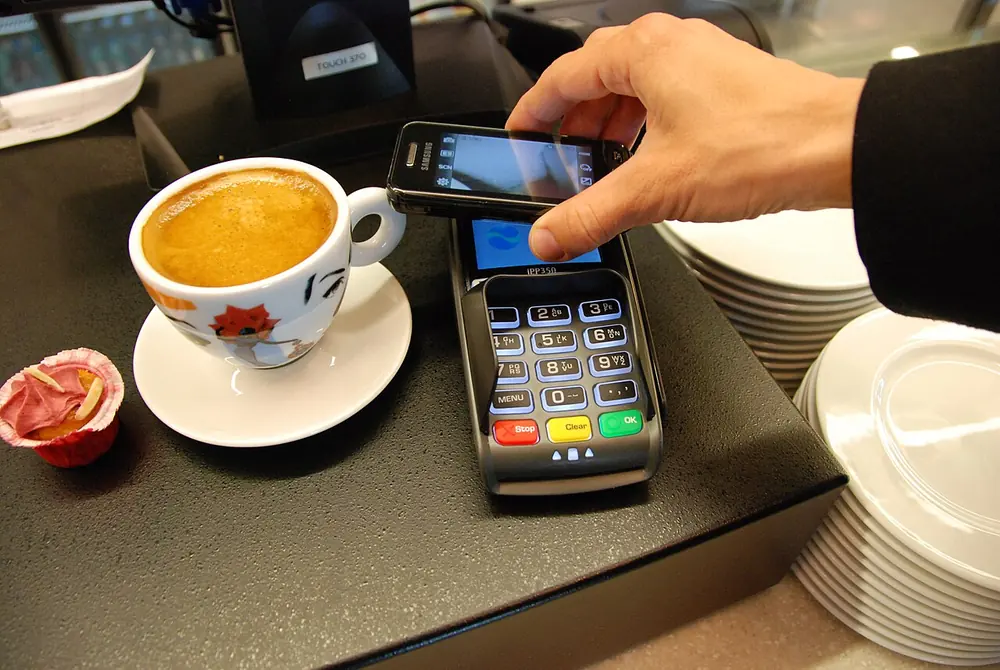
Gusto mo bang mag-deposit sa online casino gamit ang credit card? It can be done, but rarely the way people expect. Most Philippine banks code casino payments as gambling, many decline them outright, and the ones that let them through often add a gaming fee, a cash-advance style charge or interest from day one.
So the real question isn't only "which casino accepts credit card?" It's "which way of using a card costs the least, carries the least risk, and doesn't get your account or your card frozen?" This guide walks through how card payments to casinos actually work in the Philippines, what the banks and regulators have said, how the crypto on-ramp route works at a crypto casino like Cloudbet, and the cheaper options most Filipino players end up using instead. Parang kuya na nagpapaliwanag bago ka mag-swipe.
18+/21+. Crypto only. Ad: we may earn a commission. Play responsibly. October 2026

The short answer
- Few casinos take Philippine credit cards directly. Most local PAGCOR-licensed platforms are built around e-wallets and bank transfers. Most offshore crypto casinos don't run card payments themselves at all.
- Crypto casinos usually take cards through an on-ramp partner. At Cloudbet, for example, the "Deposit with card" button runs through a separate company called Swapped, which sells you crypto (BTC, ETH or USDT) that lands in your casino balance.
- Your bank decides more than the casino does. Philippine banks can decline gambling charges, add a gaming transaction fee, or treat the charge as quasi-cash or a cash advance. BPI, for example, publishes a gaming transaction fee of ₱500 or 3% of the amount, whichever is higher.
- Credit is borrowed money. Philippine card interest can run up to 3% a month under the Bangko Sentral cap. Losing a bet you made on credit is the most expensive way to lose.
- Cheaper routes exist. Many Filipino players skip the card completely and fund a crypto casino with USDT bought through GCash GCrypto, Maya Crypto or a local exchange.
Why credit cards and online casinos don't mix easily in the Philippines
Gambling has its own card code
Every card payment carries a merchant category code that tells your bank what kind of business you're paying. Betting, casino chips and lottery tickets share their own code, 7995, used by Visa and Mastercard worldwide. When a payment comes through with that code, your bank's systems know straight away that it's gambling, and each bank chooses what to do with it: approve it like a normal purchase, approve it with extra fees, or decline it.
That's why two friends can try the same casino on the same day and get different results. One card goes through, the other is declined. The casino didn't change. The bank's rules did.
Banks treat gambling charges as higher risk
From a bank's point of view, a casino deposit looks a lot like taking cash out on credit. You turn credit into something you can spend or withdraw almost like money. That's why several Philippine banks list gambling under special charges in their card terms:
- Gaming transaction fees. BPI charges a gaming transaction fee of ₱500 or 3% of the transaction amount, whichever is higher, on payments to casinos and online betting merchants. Metrobank's credit card terms also list a gaming transaction service fee.
- Quasi-cash fees. Some banks group casino chips, betting and similar charges under "quasi-cash" transactions and charge a percentage. Lists shared by Filipino cardholders in early 2026 put the quasi-cash fee at around 5% for Metrobank, RCBC and UnionBank, 2.5% for Security Bank, and none for BDO. These are user reports, not official rate sheets, and banks change fees, so check your own bank's current terms before you rely on any number.
- Cash advance treatment. Some cardholders report that their bank books gambling charges as a cash advance. Cash advances usually start charging interest from the day you take them, with no grace period, and the Bangko Sentral allows a processing fee of up to ₱200 per cash advance on top of interest.
The regulators have tightened the payment side
Philippine regulators have spent the last few years going after the money that flows into illegal gambling. In August 2025 the Bangko Sentral ng Pilipinas issued Memorandum M-2025-029, which ordered every bank and e-money issuer it supervises to remove in-app links to gambling sites within 48 hours. GCash and Maya both pulled their gaming links that weekend. The BSP has said the suspension stays until it finishes a full policy on payments for online gambling. A draft of that policy was published for comment, but as of late 2026 it is still a draft.
PAGCOR has also said it does not allow credit cards to be used to settle gambling debts, and that licensed operators should use BSP-approved payment channels. None of this makes owning a credit card or buying crypto illegal. It does mean the payment system is set up to make gambling on credit harder, not easier, and you should expect more declines and more fees over time, not fewer.
The three kinds of "casino that accepts credit card"
When you search for a casino that takes credit cards, the results mix three very different things. Knowing which one you're looking at saves you a lot of trouble.
1. PAGCOR-licensed local platforms
These are the online platforms that appear on PAGCOR's lists of licensed gaming system operators and registered brands and domains, plus the online sites of the big integrated resorts. They are the only fully legal option for players in the Philippines. Their cashiers are built around the methods Filipinos actually use: GCash, Maya, bank transfer and over-the-counter channels. Some list card payments, but it's not the norm, and the BSP link suspension has pushed many of them to change their payment flows. If a licensed platform does take your card, your bank's gambling rules still apply on your side.
Remember PAGCOR's own player rules too: you must be 21 or older, and government officials and employees, members of the AFP and PNP, students of any school regardless of age, and people on the national restricted list can't play, online or in a casino.
2. Offshore casinos that charge your card directly
Some offshore sites run card payments through their own payment processors. This is where most of the horror stories come from. The charge may show up on your statement under an unfamiliar name that looks like an online shop. Your bank may later flag it as miscoded. Refunds and withdrawals back to the card are often impossible, and if the operator vanishes, getting money back is hard. Offshore operators aren't authorised to serve Philippine players under local law. Read are offshore betting sites legal in the Philippines before you deposit anywhere outside the PAGCOR system.
3. Crypto casinos with a card on-ramp
The third type is the crypto casino that doesn't touch your card at all. Instead, it partners with a licensed crypto purchase service. You pay that service with your card, it buys crypto for you, and the crypto is sent straight into your casino account. Cloudbet works this way with Swapped. To your bank, the payment is a crypto purchase, not a casino deposit, and some banks treat crypto purchases as quasi-cash or cash advance too. To the casino, it's a normal crypto deposit.
This is the route most "accepts credit card" searches end at for crypto casinos, so the rest of this guide spends the most time on it.
How card deposits work at a crypto casino (Cloudbet example)
Cloudbet is a crypto casino and sportsbook that has run since 2013. It is operated by Halcyon Super Holdings B.V. under Curaçao Gaming Authority licence OGL/2024/328/0599. It isn't licensed by PAGCOR. Its cashier accepts crypto deposits, and its help centre says you can also buy crypto directly on the site through its payment partner, Swapped.
What Swapped is
Swapped (swapped.com) is a fiat-to-crypto service built into the Cloudbet cashier. You don't need a separate crypto wallet. You pay with a card or another supported method, Swapped buys the crypto, and it arrives in your Cloudbet balance once the transaction is confirmed. Cloudbet's help centre lists the coins you can buy this way as popular ones including BTC, ETH and USDT.
Cloudbet's payment-method page lists Visa and Mastercard as available worldwide through Swapped, along with Apple Pay, Google Pay, Skrill, Neteller and Paysafecard. For the Philippines it specifically lists GCash and Maya as local methods. Swapped is only available in "select countries", and Cloudbet says you'll only see the payment options supported where you are. So the honest answer is: the card button may or may not show for you, and the methods it offers can change. Check inside the cashier rather than trusting any review, including this one.
Step by step
- Log in and select Add funds.
- Select Deposit with card.
- Choose the currency you want to buy, then choose Swapped.
- Enter the amount and choose your payment method (card, or a local option if it's offered).
- Finish the steps on screen. Your bank may ask for a one-time PIN or app approval. That's normal for online card payments.
- Wait for the crypto to land in your Cloudbet balance after the transaction is confirmed.
Fees
Swapped charges a processing fee that depends on the payment method you choose. Cloudbet says it adds no fee of its own. Third-party reviews have quoted Swapped card fees starting from around 1% to 2%, with a small minimum purchase, but treat that as a rough guide. The quote screen shows the real amount before you confirm, so read it.
Then add your bank's side. Depending on your card, that may include a foreign transaction charge if the payment is processed in another currency, and possibly a quasi-cash or cash-advance fee if your bank classifies crypto purchases that way. Your first card purchase is the time to check your statement line by line, so you know exactly what your bank does.
If the card button isn't there
Cloudbet's help centre says that if card deposits aren't available in your country, you can still fund your account with Transfer crypto (send crypto from any wallet or exchange) or Connect wallet or exchange. For most Filipinos, that means buying USDT or another coin locally and sending it in. The next section covers that.
If you paid but the crypto didn't arrive
First check your bank, card or e-wallet statement. If no payment was taken, the purchase didn't go through and you can try again. If money was taken and nothing arrived, Cloudbet tells you to contact Swapped directly at support@swapped.com with your Swapped order reference (from the confirmation email), the payment method, the amount and currency you paid, the coin you were buying, and a screenshot showing the payment was taken. Cloudbet's own 24/7 live chat can also point you in the right direction, but Swapped handles the purchase itself.
The cheaper route most Filipinos use: buy crypto locally
If you already have GCash or Maya, you may not need a card at all. Both apps let you buy crypto inside the app through BSP-licensed providers: GCash through GCrypto, which runs on PDAX, and Maya through Maya Crypto. Exchanges like Coins.ph and PDAX are also licensed in the Philippines.
The basic flow looks like this:
- Buy USDT (or another coin the casino accepts) in GCash, Maya or a licensed exchange, paying from your own balance.
- In your casino cashier, choose the same coin and the same network, and copy the deposit address.
- Send from your app to that address, double-checking the network. GCash GCrypto supports USDT on several networks including TRC20 and ERC20. Cloudbet accepts USDT on Ethereum, BNB Smart Chain, Avalanche C-Chain, Solana, Polygon, Tron and TON.
- Wait for the network confirmations and the deposit appears in your balance.
Why is this usually cheaper? You're spending your own money, not credit, so there's no interest and no cash-advance treatment. The main costs are the exchange spread and the network fee, and on a low-fee network like Tron or Solana those are often small compared with a card's gaming or quasi-cash fee. Full walkthroughs are in how to deposit to a crypto casino with GCash, Maya crypto to casino and TRC20 vs ERC20 for casino deposits.
A few things to keep in mind. GCash and Maya send crypto to external addresses, and transfers are irreversible. Sending to the wrong network can lose the funds permanently. Large sends trigger extra checks: in Maya, sends of ₱50,000 or more ask for the receiver's details under the travel rule. And neither app links to gambling sites any more, so you'll always be copying an address yourself, not tapping a button.
What a ₱5,000 card deposit can really cost
Numbers make this clearer. Here's an illustration of the same ₱5,000 going in three different ways. The fees are examples based on published or widely reported rates. Your bank and your exact payment may differ.
Direct card charge coded as gambling
Say your bank uses a gaming fee like BPI's, ₱500 or 3% whichever is higher. On ₱5,000, 3% is only ₱150, so the ₱500 minimum applies. You've paid 10% before placing a single bet. If the charge is processed abroad, a foreign transaction fee comes on top. If you don't pay the statement in full, interest of up to 3% a month starts building on the whole amount. And if you lose the ₱5,000, you still owe all of it plus the fees.
Card through a crypto on-ramp
Here the payment is a crypto purchase, not a casino charge. If your bank treats it as a normal purchase, you pay the on-ramp's processing fee and maybe a foreign transaction fee, which on ₱5,000 could be roughly ₱50 to ₱200 depending on method and rates. If your bank treats crypto purchases as quasi-cash, add that percentage, which could be another ₱125 to ₱250 at the rates users report. Interest still applies if you carry a balance.
Your own money through GCash or Maya
You buy ₱5,000 of USDT at the app's quoted rate (the spread is built into the price) and pay a network fee to send it. On a cheap network the send fee is usually a small fraction of the card costs above. There's no interest because nothing is borrowed.
The lesson isn't that one route is free. It's that the card route has the most hidden costs, and it's the only one where a bad night can follow you onto next month's statement.
Credit card, debit card or prepaid card?
Credit card
Borrowed money with interest and gambling-specific fees. Highest chance of decline, highest cost, highest risk. Some people like that a credit card has chargeback rights, but chargeback rights aren't meant for "I lost the bet". Disputing a legitimate deposit you made yourself is likely to get your casino account closed and can be treated as fraud by your bank.
Debit card
Your own money, so no interest. Gambling codes still apply, and many debit cards issued in the Philippines are set up for local use and online shopping, with international or gambling payments blocked unless you enable them in your banking app. A debit card doesn't protect you from the same decline or fee rules on gaming transactions, so check before you try.
Prepaid and virtual cards
Prepaid cards and the virtual cards some e-wallets offer let you load a fixed amount, which is a decent way to cap spending. But issuers can block gambling codes on these as well, and their terms often say so. Don't assume a prepaid card works just because it's Visa or Mastercard.
18+/21+. Crypto only. Ad: we may earn a commission. Play responsibly. October 2026
How to check what your bank allows before you try
A declined payment is annoying. A payment that goes through and then shows a surprise ₱500 fee is worse. Five minutes of checking saves both.
- Read your card's terms and fee table. Search your bank's website for "terms and conditions" for your card, then look for words like gaming, gambling, casino, betting, quasi-cash and cash advance. If a fee is listed, it will usually say whether it's a flat amount, a percentage or "whichever is higher".
- Check your app's card controls. Most Philippine banking apps let you switch online, international and contactless payments on or off for each card. If international online payments are off, a payment processed abroad will fail no matter what.
- Ask the hotline a direct question. Something like: "If I buy crypto with this card from an online service abroad, is it posted as a regular purchase, a quasi-cash transaction or a cash advance?" Write down the answer and the date.
- Test small. If you go ahead, start with the smallest amount the cashier allows and check how it posts on your statement before you do anything bigger.
Banks update these rules, especially for crypto, so what a friend saw last year may not hold for you today.
Common problems with card purchases through an on-ramp
The one-time PIN never arrives or fails
Online card payments in the Philippines usually need a one-time PIN or app approval. If the code doesn't arrive, check that your mobile number with the bank is current and that you have signal. Don't keep retrying fast, as repeated failures can trigger a temporary fraud block on the card. Wait, then call your bank if it keeps failing.
The purchase service asks for ID
Licensed crypto purchase services generally have to know who their customers are, so don't be surprised if you're asked to verify your identity before or after the first purchase. Use your real details. The name on the card should match the name on your casino and purchase accounts, because mismatched names are a common reason payments get refused or held.
The price changed between quote and payment
Crypto prices move. The amount you receive depends on the rate when the purchase completes, and the quote may refresh if you take too long. If you're buying a stablecoin like USDT, the swing is small. With BTC or ETH it can be noticeable.
The bank reversed the charge
Sometimes a payment shows as pending and then disappears. That usually means the bank declined it after the authorisation. Check whether the crypto arrived. If it didn't and the hold dropped off, nothing was taken and you can try another method.
Withdrawals: you can't cash out to your card
This is the part people forget. Even when a deposit goes in by card, winnings usually can't go back out to that card. At a crypto casino, withdrawals are paid in crypto. At Cloudbet, you withdraw by choosing the coin and network and entering a wallet address. Withdrawals are typically processed within 24 hours after you confirm them. Then you sell the crypto for pesos in GCash, Maya, Coins.ph or PDAX and move the money to your bank.
So before you deposit by card, make sure you have a way to receive and sell crypto, ideally the same app you'd use for deposits. The steps are in how to withdraw USDT to GCash and GCash crypto withdrawals.
Also keep verification in mind. Cloudbet's limits for unverified accounts include a lifetime deposit cap of about $2,200 and a daily withdrawal cap of about $2,200. Passing ID, proof of address and face checks removes those caps. Verify early, not when you're trying to withdraw a big win.
Red flags when a site says "credit card accepted"
- The charge shows up as a shop. If a casino deposit appears on your statement as a clothing store, a software company or something else unrelated, the payment was disguised. That hurts you if anything goes wrong, and it can get your card flagged.
- An "agent" asks for your card details. Nobody should ask for your card number, CVV or OTP over Messenger, Telegram or Viber to "load" your account. That's how cards get stolen.
- A downloaded app asks for card details. Fake casino APKs are common. Cloudbet, for example, has no official mobile app at all, and says any app claiming to be Cloudbet should be reported.
- No licence you can check. A real licence can be verified with the regulator. For PAGCOR, check the brand and domain lists on pagcor.ph. For Curaçao, the casino's licence seal should open a certificate on the regulator's site that names the exact domain.
- Bonuses tied to card deposits. Offers like "deposit with card, get triple" are a common hook on sketchy sites. A legit bonus has written terms you can read before you deposit.
- Pressure to deposit fast. Countdown timers, "last slot" messages and agents chasing you are signs to walk away.
Is it legal to use a credit card at an online casino in the Philippines?
Owning a credit card and buying crypto with it aren't crimes. What matters is where you gamble. Gambling in the Philippines is legal when it's run or licensed by an authorised body such as PAGCOR. Offshore operators, crypto casinos included, are not licensed by PAGCOR and are not authorised to serve players in the Philippines. Enforcement has mostly targeted operators, local agents, advertising and payment channels rather than individual players, but that's an observation, not a guarantee, and the rules are moving. If you want full legal protection, use a PAGCOR-licensed platform and its approved payment methods.
Two more practical points. First, your card agreement is a contract. If your bank's terms say gambling charges carry a fee or are not allowed, you're bound by that. Second, POGO-era licences are gone: PAGCOR cancelled all offshore gaming licences in December 2024, so any site claiming a "PAGCOR offshore licence" today is not telling the truth.
Gambling on credit: the honest warning
Pare, real talk. Of all the ways to fund a casino account, a credit card is the one most likely to turn a hobby into a debt problem. With cash or your own e-wallet balance, when the money's gone, you stop. With credit, the limit keeps going, and chasing losses feels easy until the statement arrives. At up to 3% a month, an unpaid ₱20,000 gambling balance costs around ₱600 in interest every month, before any gaming or cash-advance fees.
If you do use a card, set rules before you start:
- Pay the full statement balance every month. If you can't, stop using the card for gambling.
- Set a small, fixed monthly amount and never top up after a loss.
- Use the casino's own limits. Cloudbet and most serious casinos let you set deposit limits, cool-off periods or self-exclusion. See crypto casino deposit limits.
- Ask your bank to block gambling transactions on your card if you notice you're struggling. Many banks can do this on request.
- Talk to someone. The National Program on Gambling Harm hotline is (02) 8248-9568. More help is on our responsible gambling page.
Quick checklist before you use a card
- Is the site licensed, and can you verify the licence yourself?
- Does your bank allow gambling or crypto purchases on this card? What fees apply? Check its current terms or call the hotline.
- Is the card payment going to the casino itself, or to a named on-ramp partner like Swapped? Know who you're paying.
- Do you have a way to withdraw and sell crypto for pesos (GCash, Maya, Coins.ph, PDAX)?
- Have you verified your casino account so withdrawal caps don't catch you later?
- Can you pay this month's statement in full, win or lose?
- Have you set a deposit limit?
If you can tick all seven, a card deposit through an on-ramp is a workable option. If not, funding with your own GCash or Maya balance through USDT is usually cheaper and safer. You can compare more options in online casino GCash deposit and USDT casinos in the Philippines, and see minimums in Cloudbet minimum deposit.
Mga Madalas Itanong (FAQ)
Is there an online casino in the Philippines that accepts credit card?
Some do, but few take Philippine cards directly. PAGCOR-licensed platforms mostly use e-wallets and bank transfers. Crypto casinos like Cloudbet take cards through an on-ramp partner (Swapped) that sells you crypto, which then lands in your casino balance. Whether it works depends on your bank, which can decline or add fees to gambling and crypto charges.
Why was my credit card declined at an online casino?
Usually because your bank blocks payments coded as gambling (merchant code 7995) or international payments on your card. It's rarely the casino's fault. Check your banking app for international and online payment settings, or call your bank. If gambling charges are blocked, the card won't work no matter which casino you try.
How much do Philippine banks charge for casino credit card payments?
It depends on the bank. BPI publishes a gaming transaction fee of ₱500 or 3%, whichever is higher. Metrobank's terms list a gaming transaction service fee. Cardholders report quasi-cash fees of around 2.5% to 5% at several banks, and some banks treat gambling charges as cash advances with interest from day one. Always check your own bank's current terms.
Can I use my credit card at Cloudbet from the Philippines?
Cloudbet's cashier has a Deposit with card option run by Swapped, which lists Visa and Mastercard plus GCash and Maya for the Philippines. It's only available in select countries and shows only the methods supported where you are, so check the cashier. If the option isn't there, you can deposit crypto from GCash, Maya or an exchange instead. Cloudbet is licensed in Curaçao, not by PAGCOR.
Can I withdraw casino winnings to my credit card?
Generally no. Crypto casinos pay withdrawals in crypto to a wallet address. You then sell the crypto in GCash, Maya, Coins.ph or PDAX and cash out to your bank. Plan your withdrawal route before you deposit.
Is it cheaper to deposit with GCash than with a credit card?
Usually, yes. Buying USDT with your own GCash or Maya balance avoids interest, gaming fees and cash-advance treatment. You pay the in-app exchange spread and a network fee, which on low-fee networks is usually small. Just make sure you choose the same coin and network as the casino deposit address.
Is it legal to gamble online with a credit card in the Philippines?
Owning a card or buying crypto isn't illegal. Gambling is legal when it's run or licensed by an authorised body like PAGCOR. Offshore casinos aren't authorised to serve Philippine players. Your card agreement may also restrict gambling charges, and the BSP has told banks and e-wallets to remove gambling links pending new rules.
What is the minimum I can deposit with a card at a crypto casino?
It depends on the casino and the on-ramp. The purchase service usually has its own minimum, and third-party reviews of Swapped mention a small minimum purchase of a few dollars. The cashier shows the current minimum when you enter an amount. Start small on your first card purchase so you can see exactly how your bank posts it.
Can I use a debit card instead of a credit card?
Often, yes, if your bank allows international online payments and doesn't block gambling or crypto codes on that card. A debit card uses your own money, so there's no interest. Check your banking app's card controls first, because many Philippine debit cards have international payments switched off by default.
Can I dispute a casino charge on my credit card if I lose?
You shouldn't. Chargebacks are for unauthorised or undelivered transactions, not lost bets. Disputing a deposit you made yourself will likely get your casino account closed and may be treated as fraud by your bank. If a charge really wasn't you, report it to your bank right away and block the card.
18+/21+. Crypto only. Ad: we may earn a commission. Play responsibly. October 2026
18+/21+. Crypto only. Ad: we may earn a commission. Play responsibly. October 2026
If gambling stops being fun, call PAGCOR's free 24/7 National Problem Gambling Helpline at (02) 8248-9568 (+63 2 8248 9568), or visit npgh.ph. Source: PAGCOR Responsible Gaming.