Roulette Strategy for Beginners: Ano ang Gumagana, Ano ang Myth (May Simulation ng 20,000 Sessions)
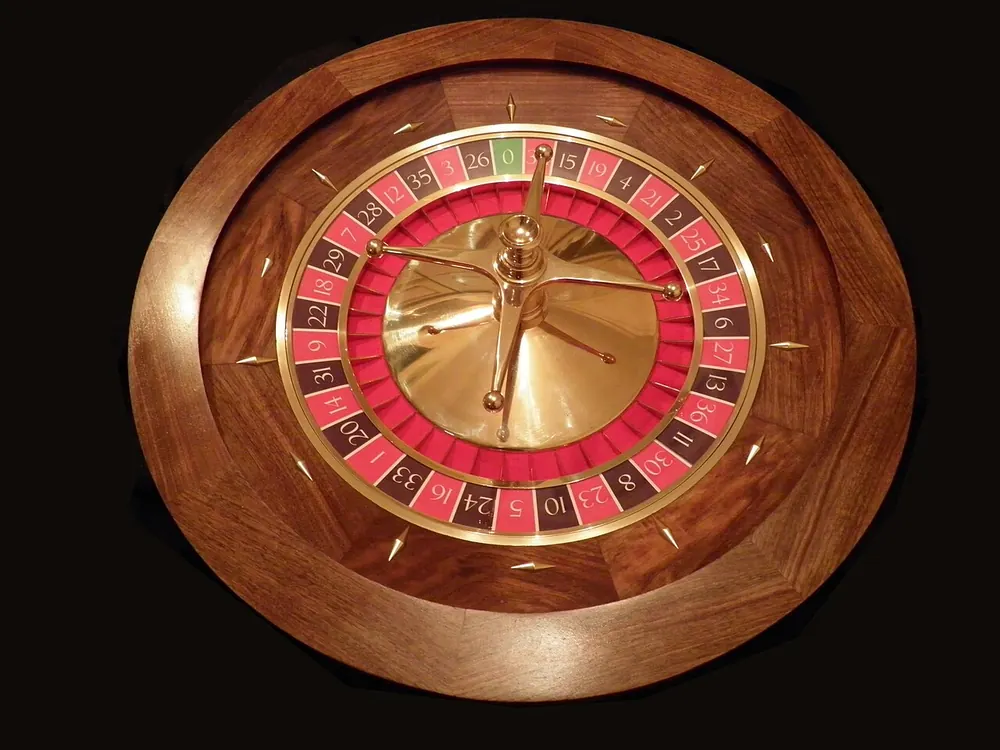
Roulette looks simple: a wheel, a ball, a table of numbers and colours. That simplicity is exactly why beginners get drawn into "strategies" promising to beat it, from doubling after every loss to elaborate bet combinations named after movie spies. Bago ka maniwala sa kahit anong system, it helps to know two things: how the game's maths actually works, and what those systems really do over thousands of spins.
This guide starts from zero: the wheel types, every bet and its true odds, and the one choice that matters most. Then we put the famous systems through a computer simulation of 20,000 roulette sessions so you can see their real behaviour, not a sales pitch. We finish with a practical first-session plan. For a broader look at where Filipinos play roulette online, see our online roulette Philippines guide.
18+/21+. Crypto only. Ad: we may earn a commission. Play responsibly. October 2026
Unang hakbang: alamin ang uri ng wheel
The single most important "strategy" decision in roulette happens before you place any chips: which wheel you play.
| Wheel | Pockets | House edge | Notes |
|---|---|---|---|
| European (single zero) | 1–36 plus 0 (37 pockets) | 2.70% | The standard choice; widely available online and in live dealer rooms |
| French (single zero with La Partage or En Prison) | 37 pockets | 1.35% on even-money bets | Half your even-money stake returns (or is held) when zero lands |
| American (double zero) | 1–36 plus 0 and 00 (38 pockets) | 5.26% | Nearly double the edge of European roulette; one bet (the five-number "basket") is worse still at 7.89% |
All three wheels pay the same: 35 to 1 on a single number, 1 to 1 on red or black. The difference is the extra zero pockets, which win for the house on most bets. Switching from American to European roulette cuts your expected losses roughly in half, without changing how you play. No betting system comes close to that improvement.
Online lobbies often have several roulette variants side by side. Check the table name and rules, look for a single zero on the wheel graphic, and, if available, French rules with La Partage for even-money bets.
Lahat ng taya sa roulette at ang totoong odds
On a European wheel, every standard bet has the same house edge of 2.70%. What changes is how often you win and how much you win when you do.
| Bet | Covers | Payout | Chance to win (European) |
|---|---|---|---|
| Straight up | 1 number | 35:1 | 2.7% (1 in 37) |
| Split | 2 adjacent numbers | 17:1 | 5.4% |
| Street | 3 numbers in a row | 11:1 | 8.1% |
| Corner | 4 numbers | 8:1 | 10.8% |
| Six line | 6 numbers (two rows) | 5:1 | 16.2% |
| Dozen / column | 12 numbers | 2:1 | 32.4% |
| Red/black, odd/even, 1–18/19–36 | 18 numbers | 1:1 | 48.6% |
Notice that red/black wins slightly less than half the time. The zero is the reason: when it lands, all red, black, odd, even, high and low bets lose (unless French La Partage or En Prison rules apply).
A quick way to see the edge on a straight-up bet: there are 37 pockets, but a win pays as if there were 36 (35 to 1 plus your stake back). That missing pocket's worth, 1 out of 37, is the 2.70% house edge.
Inside vs outside bets: ano ang pipiliin ng beginner?
Outside bets (red/black, odd/even, high/low, dozens, columns) win often and pay little. Your balance moves slowly and sessions last longer.
Inside bets (straight numbers, splits, streets, corners, six lines) win rarely and pay a lot. Your balance swings sharply; you can run through a budget quickly or hit a big win.
Both carry the same 2.70% edge on a European wheel, so neither is "better" mathematically. For beginners, outside bets are usually the more comfortable choice because they make a budget last longer and make the game's pace easier to follow. If you enjoy the thrill of a number hitting, put a small slice of your session budget on inside bets rather than switching to them entirely.
Ang simulation: 20,000 sessions bawat system
To show how popular systems behave, we simulated 20,000 roulette sessions for each one on a European wheel. Each session started with P1,000, used a base unit of P20, and lasted up to 100 spins (stopping early if the player could not afford the next bet). Progressive systems were capped so that no single bet exceeded P2,000 or the remaining balance; when a progression hit the cap, it reset to P20. The results:
| System (20,000 sessions each) | Sessions that ended ahead | Sessions ending nearly wiped out (under P20) | Average money at end | Average total wagered | Loss as % of total wagered |
|---|---|---|---|---|---|
| Flat P20 on red | 35.7% | 0.0% | P946 | P2,000 | 2.72% |
| Martingale (double after loss) | 39.4% | 32.8% | P875 | P4,651 | 2.70% |
| d'Alembert (+1 unit after loss, −1 after win) | 44.0% | 49.9% | P814 | P6,734 | 2.77% |
| Fibonacci progression | 59.3% | 19.0% | P902 | P3,699 | 2.65% |
| Paroli (double after win, reset after 3 wins) | 38.6% | 0.8% | P911 | P3,372 | 2.65% |
| James Bond (P200 per spin split across 19–36, a six line and zero) | 27.2% | 3.8% | P667 | P11,988 | 2.78% |
Look at the last column. Every system lost very close to 2.70% of everything it wagered, which is exactly the house edge of a European wheel. The small differences are random variation. This is the most important result on this page: no staking system changes the house edge.
What systems do change is the shape of your results and how much you bet in total. That is why their columns for "sessions ahead" and "nearly wiped out" look so different, even though the underlying cost per peso wagered is the same.
Martingale: maraming maliit na panalo, paminsan-minsang malaking bagsak
How it works: bet one unit on an even-money bet such as red. After a loss, double the bet. After a win, go back to one unit. Each win recovers all previous losses in the run plus one unit of profit.
What the simulation showed: Martingale ended ahead slightly more often than flat betting (39.4% vs 35.7%), because it converts most losing streaks into a one-unit win. But nearly a third of sessions (32.8%) ended almost wiped out, compared with none for flat betting. Average money at the end was lower (P875 vs P946) because the player wagered more than twice as much in total.
Why it fails: losing streaks on red are more common than intuition suggests. With a 48.6% chance of winning each spin, the chance of losing seven specific spins in a row is just under 1%, yet over 300 spins our quick simulation found at least one seven-loss streak in roughly three out of four runs. Starting at P20, seven straight losses means the eighth bet would be P2,560, with P2,540 already lost. Table maximums and your own bankroll stop the doubling, and the whole sequence's losses land at once.
Beginner verdict: avoid. Martingale feels safe because it usually wins small, and that is exactly what makes its occasional collapse so damaging.
d'Alembert: mas mabagal, pero hindi mas ligtas
How it works: add one unit to your bet after a loss; subtract one unit after a win (never below one unit). The idea is that wins and losses even out over time, leaving a small profit.
What the simulation showed: d'Alembert ended ahead in 44.0% of sessions, but half of sessions (49.9%) ended nearly wiped out within 100 spins. It also wagered the most of any single-bet system (about P6,734 per session on average), so the average final balance was the lowest of the even-money systems at P814.
Why it fails: wins and losses on red do not even out precisely, because the zero tilts every spin slightly against you. A long, uneven run pushes stakes steadily upward, and because the progression is linear rather than exponential, it feels manageable right up to the moment the bankroll runs out.
Beginner verdict: avoid. Gentler than Martingale on paper, but our simulation shows it can be just as destructive within a normal session length.
Fibonacci: madalas panalo, pero may tagong panganib
How it works: stakes follow the Fibonacci sequence (1, 1, 2, 3, 5, 8, 13, 21, ...). After a loss, move one step forward; after a win, move two steps back.
What the simulation showed: Fibonacci had the highest share of winning sessions (59.3%), but nearly one in five sessions (19.0%) ended almost wiped out. It wagered about P3,699 on average and finished at P902, slightly behind flat betting.
Why it can look good: stepping back two after a win recovers ground quickly, so many sessions end slightly ahead. The cost is concentrated in the sessions where a long losing run climbs the sequence to large stakes.
Beginner verdict: still a negative-expectation game, just with a pleasing win rate. If you use any progression, keep a hard cap low and accept that it does not reduce the house edge.
Paroli (reverse Martingale): ang mas "safe" na progression
How it works: bet one unit; after a win, double the bet; after three wins in a row (or a loss), go back to one unit. You only increase stakes with money you have just won.
What the simulation showed: Paroli ended ahead in 38.6% of sessions and almost never wiped out the player (0.8%). The average end balance was P911, a little below flat betting because it wagered more in total.
Why it behaves this way: losses are always one unit, so the bankroll declines slowly. Occasional three-win streaks produce nice jumps. It is the reverse of Martingale's shape: frequent small losses, occasional bigger wins.
Beginner verdict: the least damaging progression in our test, but it still loses about 2.7% of everything wagered. Use it for fun, not as a solution.
James Bond: magandang pangalan, mataas na taya
How it works: a fixed spread of P200 per spin in our version: P140 on high numbers (19–36), P50 on the six line 13–18 and P10 on zero. It covers 25 of 37 numbers.
What the simulation showed: it ended ahead in only 27.2% of sessions and left players with the lowest average balance (P667). The reason is simple: at P200 per spin it put about P11,988 through the wheel per session, six times the flat bettor's action, while losing the same 2.7% per peso.
Why it feels clever: you win on most spins, about two-thirds of them. But when one of the uncovered numbers (1–12) hits, you lose the full P200, and those losses outweigh the frequent small wins.
Beginner verdict: covering more numbers does not lower the edge; it only increases how much you bet per spin. Avoid at stakes that are large relative to your budget.
Labouchere at ibang "cancellation" systems
Labouchere has you write a line of numbers, such as 1-2-3-4. Each bet is the sum of the first and last numbers. Win, and you cross them off; lose, and you add the lost amount to the end of the line. When all numbers are crossed off, you have won their total.
It feels organised, and short sessions often end with the line completed. But losing runs make the line grow, and each new bet is larger than the last. Like every other system, it leaves the 2.70% edge untouched, and in long losing runs it pushes stakes up rapidly. We did not include it in the simulation table because the outcome depends heavily on the starting line chosen, but its long-run cost per peso wagered is the same.
"Hot numbers," "cold numbers" at iba pang myths
Hot and cold numbers. Many online and live tables display recent results and "hot" or "cold" numbers. On a fair wheel or a properly tested random number generator, each spin is independent. A number that came up three times recently is not more likely next spin, and one that has not appeared for 100 spins is not "due." The display is a record, not a forecast.
"Bet the zero after many spins without it." Same fallacy. The zero has a 1 in 37 chance every spin.
Dealer signature. The idea that live dealers spin with such consistency that you can predict the sector the ball lands in. In modern casinos and live studios, wheels are balanced, ball speeds vary, and pockets and frets are designed to scatter the ball. Whatever tiny physical biases might have existed in old, poorly maintained wheels, they are not something a beginner can exploit at a modern table.
"RNG roulette is rigged." At reputable operators, RNG roulette is tested so that each number appears with the correct probability. Problems are more likely at unlicensed sites with unknown software providers, which is a reason to choose operators carefully.
"I'm due a win after a losing streak." The wheel has no memory, and neither does your balance. Your next spin's odds are the same as always.
Ang mga totoong "strategy" para sa beginners
If systems do not change the edge, what can a beginner actually do? Five things genuinely help:
- Choose single-zero roulette. European at 2.70%, or French with La Partage at 1.35% on even-money bets. Avoid double-zero tables when single-zero is available.
- Bet less per hour. Your expected loss equals the house edge times total amount wagered. Fewer spins and smaller bets mean a smaller expected cost. Live dealer tables, which spin more slowly than RNG games, naturally reduce your hourly action.
- Set a session budget and unit size. A unit of 2% to 5% of your session budget keeps you playing long enough to enjoy it without a few bad spins ending the session.
- Decide your stop points. A stop-loss (end when the budget is gone) and a win goal (for example, leave when you are up 50%) protect you from chasing and from handing back winnings.
- Keep it flat or nearly flat. Our simulation shows that flat betting gave the most predictable sessions and the best average end balance at the same base stake, because it wagers the least.
Magkano ang "gastos" ng isang roulette session?
With a known house edge, you can estimate the average cost of a session in advance. On a European wheel:
| Bet per spin | 50 spins | 100 spins | 200 spins |
|---|---|---|---|
| P20 | about P27 | about P54 | about P108 |
| P50 | about P68 | about P135 | about P270 |
| P100 | about P135 | about P270 | about P541 |
| P500 | about P676 | about P1,351 | about P2,703 |
These are long-run averages; real sessions swing well above and below. On an American wheel, roughly double each figure. Thinking of a session's cost this way makes it easier to treat roulette as paid entertainment rather than as a way to make money.
Expected value, ipinaliwanag nang simple
Expected value is the average result of a bet if you could repeat it a huge number of times. On a European wheel, a P100 bet on red wins P100 with probability 18/37 and loses P100 with probability 19/37. The average is (18 − 19) ÷ 37 x P100, which is about −P2.70. A P100 straight-up bet on 17 wins P3,500 with probability 1/37 and loses P100 with probability 36/37: (3,500 − 3,600) ÷ 37, again about −P2.70.
That is why the bet type does not change the edge: the payouts are tuned so every standard bet has the same negative expected value. A betting system is just a sequence of these bets, so its expected value is the sum of many −2.70% bets. Rearranging the order or size of negative bets cannot make the total positive.
Expected value does not tell you what will happen tonight. It tells you where results drift over many sessions, which is exactly what our simulation showed when every system converged on the same percentage.
Roulette kumpara sa ibang casino games
Knowing roughly where roulette sits among casino games helps you choose your entertainment knowingly:
- Baccarat, banker bet: about 1.06% on standard eight-deck commission tables.
- French roulette even-money bets with La Partage: about 1.35%.
- European roulette: 2.70% on standard bets.
- American roulette: 5.26% on most bets.
- Perya color game (common payouts): about 7.87%.
- Slots: vary widely by game; check the published RTP (return to player) where available.
A lower edge means a lower average cost per peso wagered, but game speed matters too. A slow live roulette table can cost less per hour than a fast low-edge game played at high speed.
18+/21+. Crypto only. Ad: we may earn a commission. Play responsibly. October 2026
Bakit hindi kinatatakutan ng casino ang mga system
Casinos do not ban Martingale, Fibonacci or James Bond players. Many even display "hot numbers" and recent results prominently. The reason is simple: systems do not change the house edge, and progressions usually increase total wagering. A player using a system is, on average, a more profitable customer than one betting small flat amounts. Table maximums exist partly to stop progressions from creating unlimited liability, not because systems threaten the casino's long-run profit.
When a game provider makes it easy to see trends and repeat or double bets with one click, it is not a hint that patterns work; it is good product design for keeping players engaged.
Bago magsimula ang bawat session: limang tanong
- Is this a single-zero wheel?
- What is my session budget, and is it money I can afford to lose?
- What is my unit size and my stop-loss and win goal?
- How long will I play?
- Am I playing for fun, or trying to win back something?
If the last answer is "win back," skip the session.
Isang simpleng first-session plan
- Pick your table: single-zero (European or French), with a minimum bet that is small relative to your budget.
- Set your session budget: for example, P1,000 you are fully prepared to lose.
- Set your unit: P20 to P50.
- Choose your bets: mostly outside bets (red/black or a dozen), with an occasional small straight-up bet on a favourite number if you enjoy it.
- Set stop points: stop when the P1,000 is gone, or when you reach P1,500.
- Set a time limit: 45 minutes to an hour, with a break.
- No progressions on your first sessions. Learn the pace of the game with flat bets.
- Write down the result afterwards, win or lose.
Call bets sa European roulette: voisins, tiers at orphelins
European and French tables often offer "call bets" or "racetrack" bets that cover sections of the wheel rather than the table layout. They look advanced, but they are simply bundles of ordinary bets:
- Voisins du zero (neighbours of zero): covers the 17 numbers around zero on the wheel (22, 18, 29, 7, 28, 12, 35, 3, 26, 0, 32, 15, 19, 4, 21, 2, 25), traditionally using 9 chips across splits, streets and a corner.
- Tiers du cylindre (third of the wheel): covers the 12 numbers opposite zero (27, 13, 36, 11, 30, 8, 23, 10, 5, 24, 16, 33) using 6 split bets.
- Orphelins (orphans): covers the remaining 8 numbers (1, 20, 14, 31, 9, 17, 34, 6) using 5 chips: one straight-up and four splits.
- Neighbours bets: a number plus the two on each side on the wheel, five straight-up chips.
Because each component is a standard bet, call bets carry the same 2.70% edge on a European wheel. They are a fun way to "bet the wheel" instead of the table, especially in live dealer rooms with a racetrack layout, but they do not improve your odds. They also use several chips at once, so they increase your stake per spin; adjust your unit size accordingly.
Isang halimbawang first session (kuwento, hindi hula)
Here is how a sensible beginner session might go, described step by step. The spins are illustrative.
Maria sets aside P1,000 for a Saturday evening of live European roulette, with a P25 unit. Her plan: mostly red or black, the occasional dozen, one small straight-up bet on her birthday number every ten spins, stop at P0 or P1,500, and stop after an hour regardless.
In the first twenty spins she wins slightly more than she loses on colours and is up about P100. Her birthday number does not hit. She resists the temptation to raise her unit because she is ahead. Around spin thirty, a run of six losses in a row takes her down to about P800. This is exactly the moment Martingale players would double up. Maria keeps betting P25.
At spin forty-two, her birthday number lands. The P25 straight-up bet pays 35 to 1, P875 in profit, and she is suddenly at about P1,650, past her win goal. She stops, withdraws P650 to her wallet, and leaves the remaining P1,000 for another weekend.
Not every session ends with a lucky number. Another Saturday, the same plan might end with P600 left after an hour. The point is that the plan controls the experience either way: no chasing, no surprise losses beyond the budget, and winnings protected when they come.
Paano basahin ang screen ng live roulette table
Live dealer roulette screens pack in a lot of information. Here is what the common elements mean:
- Betting timer: how long you have to place bets before the dealer closes them. Do not rush; you can skip a spin.
- Recent results strip: the last numbers to land. Useful for checking a result, not for predicting the next one.
- Hot/cold statistics: frequency counts over a recent window. As explained above, these do not predict future spins.
- Racetrack: an oval layout of the wheel's number order, used for call bets and neighbours bets.
- Bet limits: minimum and maximum stakes for inside and outside bets. Check them before you start.
- Balance and total bet: keep an eye on the total staked per spin, especially if you use call bets that place several chips at once.
- Repeat and double buttons: handy, but they make it easy to escalate without thinking. Use "repeat," avoid "double."
Budget para sa isang buwan, hindi lang isang gabi
If you play roulette regularly, plan monthly. Decide a monthly entertainment amount for casino games, split it into sessions (for example, four sessions of P1,000), and keep each session's money separate. Winnings from one session can be withdrawn or carried over, but never used to raise stakes mid-session. If you lose a session's budget early, the next session waits until its scheduled day.
Track three numbers each month: total deposited, total withdrawn, and hours played. If deposits keep rising month after month, or hours creep up, that is a sign to scale back before it becomes a problem.
Mga common na pagkakamali ng beginners
- Playing American roulette by default. Double-zero tables nearly double your expected losses for no benefit.
- Buying a "system" or "signals." Paid systems and signal groups for roulette are a common scam pattern; no system beats the edge.
- Raising stakes after a win "because it's working." Variance is not a trend.
- Using call bets without adjusting unit size. A voisins bet uses nine chips; at P50 a chip, that is P450 a spin.
- Playing fast RNG roulette for hours. Speed multiplies total wagered, and the edge applies to every peso.
- Ignoring table limits. Limits cap progressions and can strand a Martingale player mid-sequence.
- Chasing with the remaining balance. Putting everything left on one number to "save" a session is the fastest way to end it.
Live dealer vs RNG roulette
RNG roulette uses software to generate results instantly. It is fast, which means more spins per hour and more total action. Some casinos offer provably fair versions where you can verify that results were not altered.
Live dealer roulette streams a real wheel from a studio, with a human dealer. It is slower, typically far fewer spins per hour, which is good for your budget. It is also more social and closer to the land-based experience. Some live variants add random multipliers to straight-up numbers; these usually come with reduced base payouts, so check the paytable before assuming they improve your odds.
For beginners, live single-zero roulette is often the most enjoyable option: slower pace, clear visuals and a standard edge.
Mga roulette variant na makikita mo online
Multiplier roulette. Some live and RNG games randomly boost the payout on a few straight-up numbers each spin. To fund those boosts, the standard straight-up payout is usually reduced below 35 to 1. Read the paytable; the headline multipliers do not necessarily lower the edge, and the reduced base payout matters on every spin.
Speed and auto roulette. Faster rounds, sometimes without a dealer. The edge per spin is the same as the wheel type, but more spins per hour means more total wagered and a higher hourly cost.
Mini roulette. A small wheel with 13 pockets (0 to 12) where a straight-up number typically pays 11 to 1. That works out to a house edge of about 7.69%, close to three times European roulette.
Double-ball and other novelty games. Rules and payouts vary; calculate or look up the edge before playing. Novelty usually costs extra.
For beginners, classic European or French roulette remains the clearest and most affordable choice.
Etiquette at practical tips sa live roulette
Live roulette rooms are social, with chat boxes and other players watching the same wheel. Be courteous to dealers; they do not control outcomes, and abusing them after a loss changes nothing. Keep personal information out of chat. Ignore anyone in chat promoting systems, signals or "partner" sites; that is spam at best. If the stream lags on mobile data, wait for Wi-Fi or skip spins rather than betting blind, and never place bets in the final second of the timer, when connection hiccups are most likely to cause errors.
Roulette online mula sa Pilipinas: ano ang dapat alam
Filipino players can choose between PAGCOR-licensed operators, which are regulated locally and accept peso payment channels, and offshore crypto casinos such as Cloudbet. Cloudbet's casino includes live dealer tables and provably fair games, funded in cryptocurrency. Many Filipino users buy USDT through a local exchange or a GCash-linked crypto service and send it to the casino's deposit address on the network shown, keeping balances in a stablecoin to avoid price swings.
Cloudbet is licensed in Curaçao and is not licensed by PAGCOR. Philippine regulators can block offshore sites and cannot mediate disputes, and Cloudbet's terms say it does not accept residents of jurisdictions that prohibit crypto gambling. You must be at least 21 to gamble in the Philippines, and government officials and employees are barred from gambling under PAGCOR and Civil Service rules. Check the rules that apply to you before playing anywhere.
Mga senyales na kailangan mong huminto
- You are increasing bets to win back losses.
- You are researching "unbeatable" systems after a bad session.
- You play longer than planned, often late at night.
- You use money meant for bills, school or family.
- You feel anxious or irritable when not playing.
If any of these apply, step away, use your casino's deposit limits or self-exclusion tools, and visit our responsible gambling page for Philippine helplines.
Roulette glossary para sa beginners
- Single zero / double zero: European and French wheels have one zero; American wheels have 0 and 00.
- House edge: the casino's average profit per peso wagered; 2.70% on European roulette.
- Even-money bets: red/black, odd/even, 1–18/19–36; pay 1:1.
- Inside bets: bets on specific numbers or small groups (straight, split, street, corner, six line).
- Outside bets: bets on large groups (colours, dozens, columns, odd/even, high/low).
- La Partage: French rule returning half an even-money stake when zero lands.
- En Prison: French rule holding an even-money stake for the next spin when zero lands.
- Progression: a system that changes stake size based on previous results (Martingale, Fibonacci, d'Alembert, Paroli).
- Call bets / sector bets: bets covering wheel sections, such as voisins du zero, tiers du cylindre and orphelins, common on European tables. They are combinations of standard bets and carry the same edge.
- RNG: random number generator used in digital roulette.
- Provably fair: a cryptographic method some crypto casinos use to let players verify results.
Bottom line
For beginners, the most effective roulette strategy is not a betting system. It is choosing a single-zero wheel, betting small flat units, playing fewer spins, and setting firm stop points. Our simulation of 20,000 sessions per system showed every popular progression losing almost exactly the 2.70% house edge on every peso wagered. Some systems produce more winning sessions, others fewer, but the ones that look best usually hide a higher chance of a wiped-out session. Treat roulette as entertainment with a known price, and it can be a fun part of a night. Treat it as a puzzle to beat, and it will cost you.
Mga Madalas Itanong (FAQ)
Ano ang pinakamagandang roulette strategy para sa beginners?
Play a single-zero wheel (European, or French with La Partage), bet small flat units, mostly on outside bets, set a budget and stop points, and play fewer spins. No betting system lowers the house edge.
Gumagana ba ang Martingale sa roulette?
No. In our simulation of 20,000 sessions it lost about 2.70% of everything wagered, the same as flat betting, and nearly a third of sessions ended almost wiped out.
Ano ang pinagkaiba ng European at American roulette?
European roulette has one zero and a 2.70% house edge; American roulette adds a double zero and has a 5.26% edge. Payouts are the same, so European is the better choice.
Mas maganda ba ang outside bets kaysa inside bets?
On a European wheel all standard bets carry the same 2.70% edge. Outside bets win more often with smaller payouts, which makes a budget last longer for beginners.
Totoo ba ang hot at cold numbers?
Recent-results displays show what happened, but on a fair wheel each spin is independent. Hot or cold numbers do not predict the next result.
Ano ang La Partage?
A French roulette rule that returns half your even-money stake when the ball lands on zero, cutting the house edge on those bets to about 1.35%.
May roulette ba sa Cloudbet?
Cloudbet's casino includes live dealer tables and provably fair games, funded in crypto. It is licensed in Curacao, not by PAGCOR.
Magkano ang dapat itaya kada spin?
A common guide is 2% to 5% of your session budget per spin. With P1,000, that is P20 to P50, which lets you enjoy a session without a few spins ending it.
18+/21+. Crypto only. Ad: we may earn a commission. Play responsibly. October 2026
18+/21+. Crypto only. Ad: we may earn a commission. Play responsibly. October 2026
If gambling stops being fun, call PAGCOR's free 24/7 National Problem Gambling Helpline at (02) 8248-9568 (+63 2 8248 9568), or visit npgh.ph. Source: PAGCOR Responsible Gaming.