Pusoy Rules: How to Play 13-Card Pusoy (Chinese Poker) the Filipino Way
Welcome bonus for new players + fast crypto payouts. Just helping a brother out.
18+/21+. Crypto only. Ad: we may earn a commission. Play responsibly. October 2026
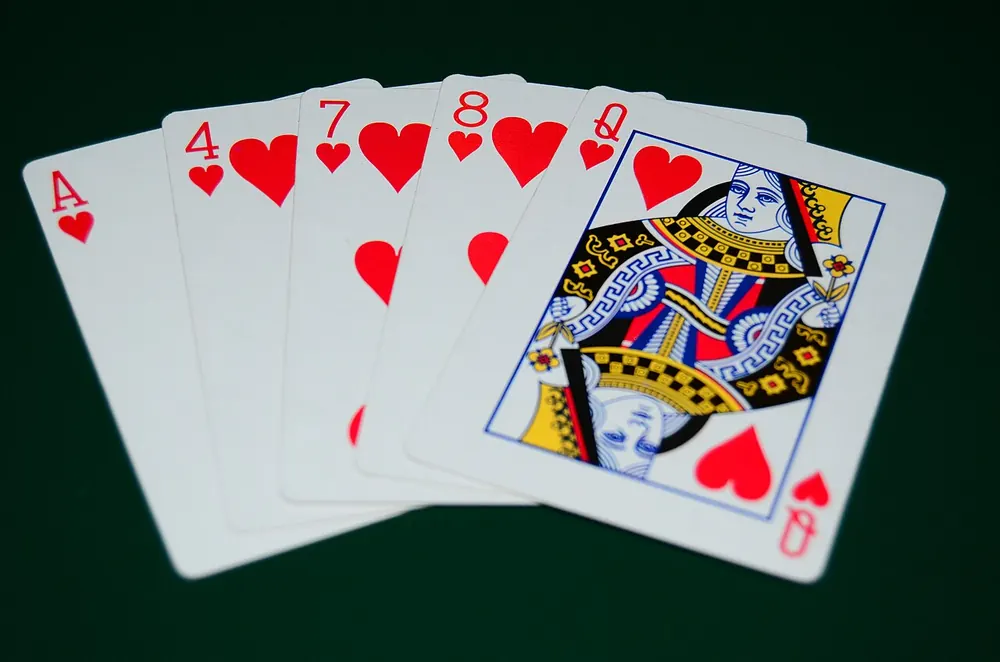
Sa Pinoy card tables, ang "Pusoy" ay ang 13-card na laro kung saan hinahati mo ang baraha sa tatlong poker hands. Internationally it's called Chinese Poker. It's a game of arranging, not bluffing: all four players get 13 cards, split them into three hands, then everyone reveals at once.
Pusoy is often confused with Pusoy Dos, which is a completely different shedding game; we cover that one in our Pusoy Dos rules guide. For casino-style card games online, see our online casino Philippines guide.
18+/21+. Crypto only. Ad: we may earn a commission. Play responsibly. October 2026
The basics
- Players: usually 4 (the whole deck is dealt). Two or three can play, with leftover cards set aside.
- Deck: standard 52 cards, no jokers.
- Deal: 13 cards each.
- Goal: arrange your 13 cards into three poker hands that beat the matching hands of your opponents.
The three hands
| Hand | Cards | Also called | Rule |
|---|---|---|---|
| Back | 5 | Bottom, likod | Must be your strongest |
| Middle | 5 | Gitna | Must be no stronger than the back |
| Front | 3 | Top, harap, ulo | Must be your weakest |
The ordering rule is the heart of the game: back ≥ middle ≥ front. If you set them out of order, it's a foul (misset), and you lose every comparison automatically, usually with whatever extra penalty your group uses.
Hand rankings
Standard poker rankings apply, from strongest to weakest:
- Royal flush
- Straight flush
- Four of a kind
- Full house
- Flush
- Straight
- Three of a kind
- Two pair
- One pair
- High card
The three-card front hand can only be three of a kind, a pair, or high card. Three-card straights and flushes don't count. Suits normally don't rank, so identical hands tie. Aces are high, and can also be low in an A-2-3-4-5 straight.
How a deal works
- Shuffle, cut, and deal 13 cards to each of the four players.
- Everyone arranges their hands face down. There's no betting during this phase in the basic game.
- When all players say they're set, everyone reveals at the same time.
- Compare each of your three hands with the matching hand of each opponent.
- Settle points or money, then the deal passes.
Scoring
The most common method: against each opponent, you win 1 point for each of the three hands you beat and lose 1 point for each you lose. Ties score zero. Every pair of players settles separately, so in a four-player game you're effectively playing three separate matches each deal.
Example. Against Ben you win back and middle but lose front: +2 − 1 = +1 from Ben. Against Carla you lose all three: −3. Against Dante you win front only: +1 − 2 = −1. Your total for the deal: −3.
Common Filipino house rules
Pusoy is a folk game, so rules vary. Settle these before dealing:
- Sweep bonus (scoop): beating an opponent on all three hands often earns extra points, for example 3 extra (6 total instead of 3).
- Royalties: bonus points for very strong hands, such as four of a kind or straight flush in the back, a full house in the middle, or trips in the front. Amounts vary widely.
- Automatic wins ("naturals"): some groups give an instant win for special 13-card hands, such as a 13-card dragon (A through K), six pairs, or three flushes/three straights across the hands.
- Foul penalty: losing all three hands, sometimes counted as being swept.
- "Two of three" format: one Philippine variant reported by card game researchers has a single winner per deal, the player who beats every other player on at least two of three hands.
Arrangement strategy
Pusoy is mostly about how you split strength across the three hands. Some reliable principles:
1. Build the back first, but don't overload it
Find your strongest five-card hand. If it's far stronger than anything you can make with the rest, consider whether moving a pair or high cards to the middle or front wins more comparisons. Winning back by a mile and losing middle and front is still −1 per opponent.
2. Aim to win two of three
Against each opponent, winning two hands nets +1. A balanced arrangement that's competitive in all three usually beats a lopsided one.
3. Value the front
Front hands are weak on average, so a pair of high cards, or even a single ace, in front often wins. Many average front hands are just high card.
4. Never foul
Before revealing, check: is the back at least as strong as the middle? Is the middle at least as strong as the front? A strong front pair over a middle with only high card is a foul.
5. Consider the bonuses
If your group pays royalties, keeping a full house in the middle or trips in front may be worth more than balance.
Worked arrangement
Your 13 cards: A♠ A♦ K♣ K♥ 9♠ 9♣ 7♦ 6♦ 5♦ 4♦ 2♦ Q♥ 3♠.
Option A: Back: diamond flush 7-6-5-4-2. Middle: A-A-K-K with 9♠ (two pair, aces and kings). Front: 9♣ Q♥ 3♠ (queen high). Order is valid: flush ≥ two pair ≥ high card. But a queen-high front loses to most front hands.
Option B: Back: diamond flush. Middle: K-K-9-9 with Q♥ (two pair). Front: A♠ A♦ 3♠ (pair of aces).
Check order: flush ≥ two pair (kings and nines) ≥ pair of aces. Valid. Option B moves the aces to the front, where a pair of aces wins nearly every front comparison, while the middle stays a solid two pair. Option B is usually stronger.
Scoring a full table of four
Because every pair of players settles separately, the four totals always add up to zero. A sample deal:
| Player | vs others (points) | Total |
|---|---|---|
| Ana | +1, +3, −1 | +3 |
| Ben | −1, +1, −1 | −1 |
| Carla | −3, −1, +1 | −3 |
| Dante | +1, +1, −1 | +1 |
Check: 3 − 1 − 3 + 1 = 0. If your tally doesn't sum to zero, someone mis-scored. Groups playing for money usually set a peso value per point, for example ₱5, so Ana would collect ₱15 that deal. With sweep bonuses, single deals can swing much more, so pick a per-point value everyone is comfortable with.
Playing with two or three
With fewer than four players, deal 13 cards each and set the rest aside unseen. Scoring works the same way. Fewer players means fewer comparisons per deal and smaller swings. Some groups deal 17 cards each with three players and let everyone discard four, which gives more choice when arranging.
18+/21+. Crypto only. Ad: we may earn a commission. Play responsibly. October 2026
Another close decision
Suppose you hold a full house (Q-Q-Q-5-5) and otherwise unconnected cards: A, K, J, 9, 8, 6, 3, 2 of mixed suits. Keep the full house in back; breaking it gains nothing. You might be tempted to put the ace in front (A-3-2) to win that hand, leaving K-J-9-8-6 in the middle. But high-card hands compare by their top card, so an ace-high front would outrank a king-high middle, which is a foul. The legal best is middle A-K-J-9-8 and front 6-3-2. Lesson: when your hand is one-dimensional, accept a likely −1 per opponent and never risk a foul to chase a front win.
How often strong hands appear
We simulated 200,000 random 13-card hands:
| Your 13 cards contain | How often |
|---|---|
| At least two pairs | about 99% |
| Five or more cards of one suit (a flush is possible) | about 65% |
| Three of a kind or better (by rank) | about 49% |
| Four of a kind | about 3.5% |
Flushes and trips are common in 13 cards, which is why two pair often loses in the back. Use this to set expectations: a flush in the back is good but not dominant; a full house or better usually wins it.
Quick checklist before you reveal
- Back is at least as strong as middle.
- Middle is at least as strong as front (compare high cards carefully when both are high-card hands).
- Front has no "straight" or "flush" you're counting on.
- You've considered moving a high pair to the front.
- You know your group's bonus rules.
Common mistakes
- Fouling by putting a pair in front over a high-card middle.
- Stacking everything into the back.
- Forgetting that three-card straights and flushes don't count in front.
- Arguing about bonuses after the reveal; agree first.
- Taking too long to set; many groups use a time limit.
Time limits and table speed
Arranging 13 cards can take a while, especially for beginners. Many groups set a limit, such as one or two minutes, after which an unset hand is played as it lies or counted as a foul. A timer keeps the game moving and stops one player from holding everyone up.
Etiquette
- Keep your cards hidden while arranging; don't comment on your hand.
- Reveal together; don't change a hand after anyone has revealed.
- Lay hands clearly in three rows so everyone can compare.
- Settle each deal before the next.
Why Pusoy rewards patience
Unlike Lucky 9, where a round is decided in seconds, Pusoy gives you time to think, and the better arranger wins more over a session. Experienced players win more points not by getting better cards but by splitting them better and never fouling. That makes it one of the more skill-based Filipino card games, and a good one to play for points rather than money while you learn.
Pusoy vs Pusoy Dos vs Tongits
Pusoy is an arranging game with one decision per deal. Pusoy Dos is a climbing, shedding game: you play combinations in turn and race to empty your hand. Tongits is a rummy-style draw-and-discard game with melds. If you enjoy planning one perfect setup, Pusoy is your game.
Taglish recap
Labintatlong baraha, tatlong kamay: likod (5), gitna (5), harap (3). Dapat pinakamalakas ang likod at pinakamahina ang harap; kapag mali, foul at talo lahat. Kada kalaban, +1 sa bawat kamay na panalo at −1 sa talo. Mas madalas manalo ang balanseng ayos kaysa ibuhos lahat sa likod. Pag-usapan muna ang bonuses bago mag-deal.
Online Pusoy and legal notes
Pusoy appears in mobile card apps, usually for play chips. Real-money versions marketed in Facebook groups are often unlicensed; avoid sending money to personal e-wallets. Private betting games can fall under the anti-illegal gambling law (PD 1602). Licensed gambling is for adults 21 and over, and PAGCOR bars students and government employees. Offshore casinos such as Cloudbet offer poker-style table games to Filipino players; Cloudbet is licensed in Curaçao, not by PAGCOR, so there's no local regulator for disputes.
Mga Madalas Itanong (FAQ)
Pareho ba ang Pusoy at Pusoy Dos?
Hindi. Ang Pusoy ay Chinese Poker na hinahati ang 13 baraha sa tatlong kamay; ang Pusoy Dos ay shedding game na parang Big Two.
Ano ang foul sa Pusoy?
Kapag mas malakas ang harap kaysa gitna, o ang gitna kaysa likod. Talo ang lahat ng tatlong kamay.
Pwede bang straight o flush ang harap?
Hindi. Sa tatlong baraha, trips, pair o high card lang ang bilang.
Paano ang scoring?
Karaniwan, +1 sa bawat kamay na panalo at −1 sa talo laban sa bawat kalaban, plus bonuses kung napagkasunduan.
PAGCOR-licensed ba ang Cloudbet?
Hindi, Curaçao ang lisensya ng Cloudbet.
18+/21+. Crypto only. Ad: we may earn a commission. Play responsibly. October 2026
18+/21+. Crypto only. Ad: we may earn a commission. Play responsibly. October 2026
If gambling stops being fun, call PAGCOR's free 24/7 National Problem Gambling Helpline at (02) 8248-9568 (+63 2 8248 9568), or visit npgh.ph. Source: PAGCOR Responsible Gaming.