Sic Bo Rules: Complete Guide to Every Bet, Payout and Table Procedure
Welcome bonus for new players + fast crypto payouts. Just helping a brother out.
18+/21+. Crypto only. Ad: we may earn a commission. Play responsibly. October 2026
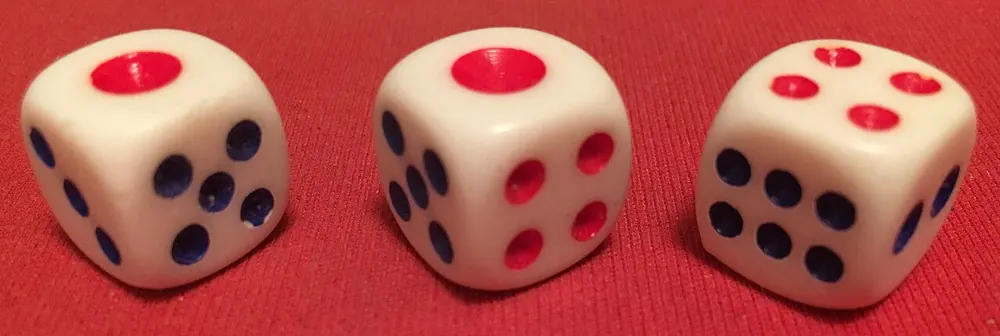
Sic bo ("precious dice") is a three-dice game from China that you'll find at Manila casinos and in nearly every Asian live casino lobby. The rules are short, but the layout has dozens of boxes, and each one settles differently. Knowing exactly when each bet wins, and what triples do to your Big or Small bet, is the difference between understanding the game and guessing.
This page is the rulebook. For the full payout table with the math, our Tagalog sic bo payout table page goes deeper; to choose a live table, see our live casino Philippines guide.
18+/21+. Crypto only. Ad: we may earn a commission. Play responsibly. October 2026
Equipment and the basic idea
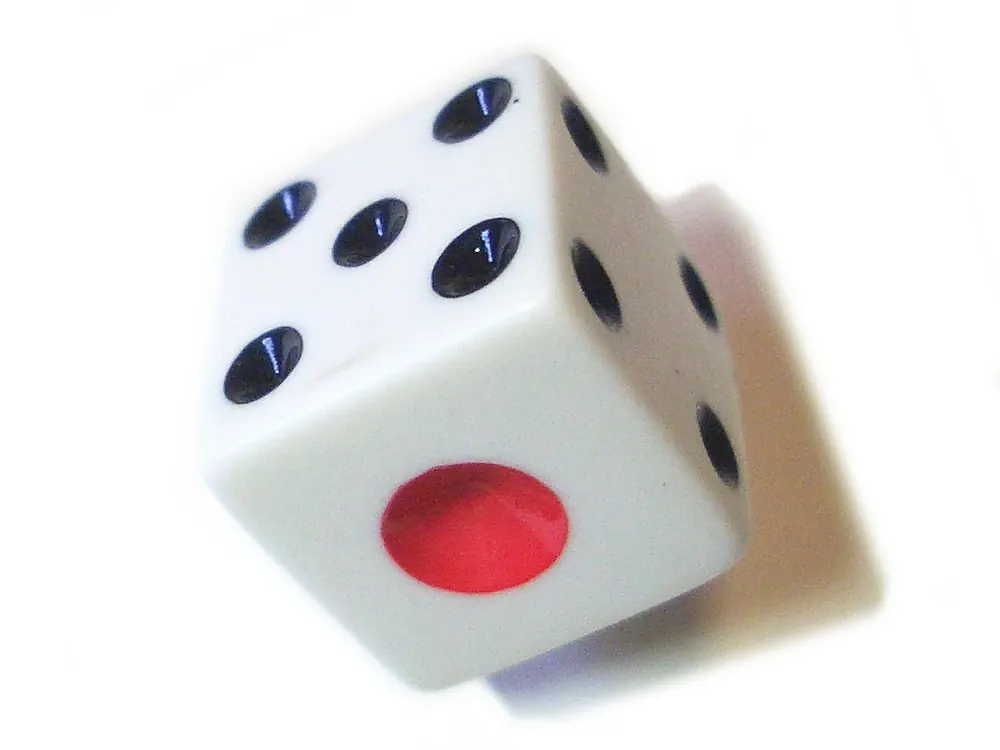
Three standard six-sided dice are shaken inside a covered container, traditionally a dome-shaped shaker or a small cage, and in modern live studios an automatic vibrating shaker under a glass dome. Players bet on the outcome: the total of the three dice, particular numbers, combinations, or triples. There are no decisions after the dice are shaken. Each round is one shake, one result, then settlement.
There are 216 possible ordered results (6 × 6 × 6). Every probability in sic bo comes from counting how many of those 216 results make a bet win.
A short history
Sic bo descends from older Chinese dice games and is closely related to the English game Grand Hazard and the American carnival game Chuck-a-luck, which also use three dice and bets on which numbers appear. It spread through Macau's casinos and became a fixture across Asia, then moved online with live dealer studios. In the Philippines, it sits naturally alongside games like baccarat and the perya colour game, and many players pick it up quickly because "three dice, bet on numbers" feels familiar.
Where the numbers come from
Every rule above rests on simple counting. A few examples that help the rules stick:
- Why 10 and 11 are the most common totals: 27 of the 216 combinations add up to each, compared with just 1 for 3 or 18. Totals near the middle have far more ways to happen.
- Why your single number hits so often: the chance a given number appears on none of the three dice is (5/6)³, about 57.9%. So it shows on at least one die about 42.1% of the time. Split further: once on 75 outcomes, twice on 15, three times on 1.
- Why a two-dice combo is 30 of 216: for 2 and 5, the third die can be any of six numbers; counting arrangements and removing double-counts leaves 30.
- Why the triple rule matters: without it, Big and Small would each win exactly half the time and the house would have no edge on them at all. The six triples, 2.78% of outcomes, are the entire house advantage on those bets.
Round procedure at a live table
- Betting opens. A countdown timer appears, often 15 to 20 seconds online. You place chips on the layout.
- Betting closes. No more bets are accepted once the timer hits zero.
- Shake. The dealer or machine shakes the dice. In land-based casinos, the dealer presses a button that vibrates the dome.
- Reveal. The result is shown and the winning areas on the layout light up.
- Settlement. Winning bets are paid; losing bets collected. History boards update.
A round typically takes 40 to 60 seconds, so expect around 60 rounds an hour at a live table.
Rule 1: Big and Small
Small wins if the total is 4 to 10. Big wins if the total is 11 to 17. Both pay 1:1.
The crucial rule: both Big and Small lose on any triple. A roll of 2-2-2 (total 6) looks like Small, but it loses. The same for 5-5-5 (total 15) on Big. Totals of 3 (1-1-1) and 18 (6-6-6) are triples anyway, which is why Small starts at 4 and Big stops at 17.
Of the 216 outcomes, 105 win for Big and 105 for Small. The six triples are the house's advantage, giving a house edge of 2.78% on each. That makes Big/Small the cheapest bets on the layout.
Rule 2: Odd and Even
Offered at most tables. Odd wins when the total is odd; Even when the total is even. Both pay 1:1, and both lose on any triple, exactly like Big/Small. Same 2.78% edge.
Rule 3: Total bets (4 to 17)
You pick a specific total. If the three dice add up to it, you win. Totals of 3 and 18 are not offered separately at most tables because they're covered by the specific triple bets. Triples do count for total bets: if you bet on 9 and 3-3-3 comes up, you win.
A common payout schedule, used in Macau and many live studios, with the house edge for each:
| Total | Ways (of 216) | Typical payout | House edge |
|---|---|---|---|
| 4 or 17 | 3 | 60:1 | 15.28% |
| 5 or 16 | 6 | 30:1 | 13.89% |
| 6 or 15 | 10 | 17:1 | 16.67% |
| 7 or 14 | 15 | 12:1 | 9.72% |
| 8 or 13 | 21 | 8:1 | 12.50% |
| 9 or 12 | 25 | 6:1 | 18.98% |
| 10 or 11 | 27 | 6:1 | 12.50% |
Payouts vary between casinos and providers. Some tables pay 50:1 on 4/17 or 7:1 on 9/12. Always check your table's paytable, because a small payout change can shift the edge by several percentage points.
Rule 4: Single number (Three Single Number)
You bet on one number, 1 to 6. You win if that number appears on at least one die. The payout scales with how many dice show it:
- Appears on one die: 1:1
- Appears on two dice: 2:1
- Appears on all three: 3:1 (some tables pay more, up to 12:1)
At 1/2/3 payouts, the edge is about 7.87%. Your number appears on at least one die about 42% of the time (91 of 216 outcomes), which is why the bet feels like it hits often.
Rule 5: Two-dice combination (Domino)
You pick two different numbers, for example 2 and 5. You win if both appear among the three dice. There are 15 possible pairs. Typical payout is 5:1, and the chance is 30 of 216, or 13.89%. The edge is 16.67%. If both numbers appear and the third die repeats one of them (2-5-5), it still pays once.
Rule 6: Specific double
You pick a number and bet that at least two dice will show it, for example two 4s. A specific triple (4-4-4) also wins this bet at most tables. Typical payout is 10:1, giving an 18.52% edge; at tables paying 8:1 the edge jumps to 33.33%.
Rule 7: Specific triple
You pick a number and need all three dice to show it, for example 6-6-6. Probability 1 in 216. Typical payout 180:1 (edge 16.20%); some tables pay 150:1 (edge 30.09%).
Rule 8: Any triple
Wins if all three dice match, whatever the number. Probability 6 in 216 (2.78%). Typical payout 30:1 (edge 13.89%); at 24:1 the edge is 30.56%.
Rule 9: Three-dice combinations (where offered)
Some electronic and live versions let you bet on an exact set of three different numbers, such as 1-3-5, or on specific combinations of a double plus a single. These pay more and vary widely by provider. Read the info panel; don't assume.
Summary: which bets lose on triples?
| Bet | Triple effect |
|---|---|
| Big / Small | Loses on any triple |
| Odd / Even | Loses on any triple |
| Totals | Triple counts toward the total |
| Single number | Pays the "three dice" rate if your number |
| Specific double | Wins if the triple is your number (most tables) |
| Two-dice combo | Can't win on a triple (needs two different numbers) |
Worked settlement examples
Result: 3-4-6 (total 13).
- Big ₱100: wins ₱100.
- Odd ₱100: 13 is odd and not a triple, so it wins ₱100.
- Total 13 ₱50 at 8:1: wins ₱400.
- Single 4 ₱50: appears once, wins ₱50.
- Combo 3-6 ₱20 at 5:1: wins ₱100.
- Specific double 4 ₱20: loses.
Result: 5-5-5 (total 15).
- Big ₱100: loses (triple).
- Odd ₱100: loses (triple), even though 15 is odd.
- Total 15 ₱50 at 17:1: wins ₱850.
- Single 5 ₱50 at 3:1: wins ₱150.
- Specific double 5 ₱20 at 10:1: wins ₱200 at most tables.
- Any triple ₱20 at 30:1: wins ₱600.
Result: 1-1-2 (total 4).
- Small ₱100: wins ₱100.
- Even ₱100: wins ₱100.
- Total 4 ₱10 at 60:1: wins ₱600.
- Single 1 ₱50: appears twice, wins ₱100 at 2:1.
- Specific double 1 ₱20 at 10:1: wins ₱200.
- Combo 1-2 ₱20 at 5:1: wins ₱100.
18+/21+. Crypto only. Ad: we may earn a commission. Play responsibly. October 2026
Frequently confused rules
- "Is 1-1-1 Small?" No. Total 3 is a triple and isn't part of Small; it only wins specific triple, any triple, single 1, specific double 1 (most tables), and nothing else.
- "Does 2-2-5 pay a combo 2-5 twice?" No. Combination bets pay once when both numbers appear.
- "If my single number shows on all three dice, is it 3:1?" At standard tables, yes; some tables pay more, so check the paytable.
- "Can I cancel a bet after the timer?" No. Once betting closes, bets are locked.
Reading the layout
The standard layout runs from top to bottom: Small and Big at the far ends of the top row with specific doubles, any triple and specific triples in between; a row of totals 4 to 17 below; then the 15 two-dice combinations; and at the bottom, the six single-number boxes. Odd and Even, when offered, usually sit beside Small and Big. Online tables often show the payout inside each box. If you're unsure what a box does, hovering or long-pressing usually shows the rule.
Variants you'll meet online
Super Sic Bo and multiplier versions
Some live studios add random multipliers to certain boxes each round, sometimes hundreds of times the stake on totals or triples. To pay for this, the base payouts on those boxes are reduced. The overall edge on boosted boxes is usually similar to or higher than the classic game. Big/Small often keep their normal payout. Read the paytable for each version.
Hi-Lo (Hi-Lo 11)
Popular in some Asian markets. Bets on High (12 or more), Low (10 or less) or exactly 11 ("Hi-Lo"), with different payouts from Big/Small. Rules differ from sic bo proper, so treat it as a separate game.
RNG sic bo
Software versions use a random number generator instead of physical dice. Rules are the same; rounds can be much faster, which increases hourly cost.
Perya-style dice games
Filipino perya colour games share the "three dice, bet on what appears" idea, but they use coloured dice and different payouts. Our color game technique page tested common perya systems.
Hourly cost by bet type
At around 60 rounds an hour with ₱100 per round:
| Bet | Edge | Expected cost per hour |
|---|---|---|
| Big or Small | 2.78% | about ₱167 |
| Single number | 7.87% | about ₱472 |
| Total 10 or 11 | 12.50% | about ₱750 |
| Two-dice combo | 16.67% | about ₱1,000 |
These are long-run averages. A lucky night can beat them; over many nights, the averages win.
Rules that sometimes differ between tables
- Payouts on totals, doubles and triples.
- Single number payout when all three dice match (3:1 vs higher).
- Whether a triple wins the specific double bet.
- Minimum and maximum bets per box, and overall table limits.
- Whether Odd/Even is offered.
- Malfunction rules: what happens if a die lands tilted or the shaker fails. Usually the round is void and bets returned, or the dice are re-shaken.
Dice fairness and misreads
In live casinos, dice are precision-made and regularly replaced. If a die lands cocked or the result can't be read, the house rules typically call for a re-shake. In online live studios, a camera and dealer confirm the result, and the software records it. If you think a result was misread, contact support with the round ID shown in your game history.
Playing sic bo in a land-based casino
At a physical table in a Manila integrated resort, the flow is the same, but a few practical points differ from online:
- Buy chips from the dealer or the cage; cash isn't placed on the layout.
- Place your chips clearly inside a box. If they straddle a line, ask the dealer which bet it is before betting closes.
- Don't touch your chips once the dealer announces no more bets.
- Electronic tables often light up the winning boxes on the layout after each shake, which helps you check your result.
- Table minimums are usually higher than online, so budget accordingly.
What if your connection drops online?
If you lose connection after betting closes, your bet usually stands and settles normally; you'll see the result in your game history when you reconnect. If you lose connection before the timer ends, the bet may not have been placed. Check the round ID in your history and contact support if something doesn't match. On unstable mobile data, choose tables with longer betting timers.
History boards and statistics panels
Live tables show recent results, "hot" and "cold" numbers, and percentages for Big/Small over the last 100 rounds. These are records, not predictions. Dice don't remember previous shakes, and a number that hasn't appeared for 30 rounds is no more likely to appear next. Use the panels to confirm results, not to pick bets.
Glossary
- Shaker / dome: container where dice are shaken.
- Triple: all three dice the same.
- Double: two dice the same.
- Domino / combination: bet on two different numbers both appearing.
- Single: bet on one number appearing.
- Paytable: the list of payouts for each box at your table.
Common mistakes
- Forgetting that triples kill Big, Small, Odd and Even.
- Assuming payouts are the same everywhere.
- Spreading chips across many boxes to "cover" the board, which mostly stacks high-edge bets.
- Reading history boards as predictions.
- Chasing losses with high-payout totals or triples.
Choosing a table: what to check first
- Paytable. Compare payouts on totals, doubles and triples with the standard schedule above. Better payouts mean a lower edge.
- Triple rule on Big/Small. Confirm triples lose; that's standard, but variants exist.
- Limits. Make sure the minimum fits your budget so you're not forced into bigger bets.
- Timer length. Longer timers suit mobile players.
- Variant. Know whether you're at classic sic bo, a multiplier version, or Hi-Lo.
Taglish recap
Tatlong dice, isang shake kada round. Pinakamura ang Big at Small (2.78% edge), pero tandaan: talo sila kapag triple. Kasama naman ang triple sa total bets. Malaki ang bayad sa totals, doubles at triples, pero mas malaki rin ang kinukuha ng bahay. Laging basahin ang paytable dahil iba-iba ang bayad kada table, at huwag gawing hula ang history board.
How to start sensibly
- Watch a few rounds without betting to learn the layout and timer.
- Start with Big/Small at flat stakes.
- If you want excitement, add a small side bet, not a big one.
- Set a budget and a time limit before you start.
- Stop when either runs out.
Strategy questions, like whether any betting system helps, are covered in our sic bo strategy cheat sheet.
Legal and responsible play
Sic bo is offered in PAGCOR-licensed casinos in the Philippines; only adults 21 and over may play, and PAGCOR bars students and government employees. Offshore crypto casinos such as Cloudbet offer live sic bo to Filipino players; Cloudbet is licensed in Curaçao, not by PAGCOR, so there's no local regulator for disputes. Treat it as entertainment with a fixed budget.
Mga Madalas Itanong (FAQ)
Natatalo ba ang Big at Small kapag triple?
Oo. Sa halos lahat ng table, talo ang Big, Small, Odd at Even kapag triple ang lumabas.
Ano ang pinakamababang house edge sa sic bo?
Big, Small, Odd at Even, mga 2.78% bawat isa.
Kasama ba ang triple sa total bets?
Oo. Kung tumaya ka sa 9 at 3-3-3 ang lumabas, panalo ka.
Pare-pareho ba ang payouts sa lahat ng sic bo tables?
Hindi. Iba-iba ang bayad sa totals, doubles at triples, kaya laging tingnan ang paytable.
PAGCOR-licensed ba ang Cloudbet?
Hindi, Curaçao ang lisensya ng Cloudbet.
18+/21+. Crypto only. Ad: we may earn a commission. Play responsibly. October 2026
18+/21+. Crypto only. Ad: we may earn a commission. Play responsibly. October 2026
If gambling stops being fun, call PAGCOR's free 24/7 National Problem Gambling Helpline at (02) 8248-9568 (+63 2 8248 9568), or visit npgh.ph. Source: PAGCOR Responsible Gaming.