Crypto Dice Game Casino Philippines: How Dice Works, the Real Odds, and How to Play It Smart
Welcome bonus for new players + fast crypto payouts. Just helping a brother out.
18+/21+. Crypto only. Ad: we may earn a commission. Play responsibly. October 2026
Crypto Casino · Updated ·  Written by Carla Reyes ·
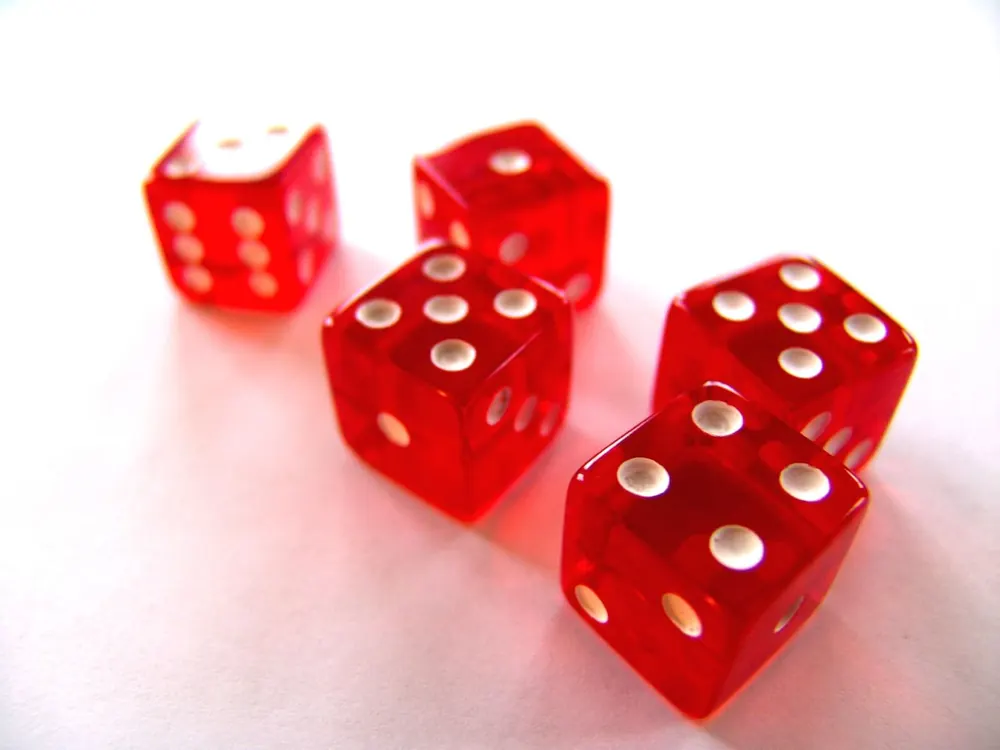
Crypto dice is probably the simplest game sa buong crypto casino: you pick a number, choose "roll over" or "roll under", and one random roll from 0 to 100 decides it. No dealer, no reels, no cards. Pero dahil sobrang simple at sobrang bilis, it's also the game where people lose track of how much they've actually wagered.
So pare, here's the honest version: how the game works, the exact maths behind every multiplier, what the house edge costs you in real pesos per hour, what 20,000 simulated sessions look like, and how to check that a roll wasn't tampered with. If you're new to crypto gambling in general, start with our crypto casino Philippines guide first.
18+/21+. Crypto only. Ad: we may earn a commission. Play responsibly. October 2026

How a crypto dice game works
Almost every crypto dice game uses the same layout. There's a slider from 0 to 100 (often shown as 0.00 to 99.99). You drag it to a target number, choose whether you need the roll to land over or under that target, enter your stake, and hit roll. The game generates one number. If it lands on your side of the line, you win your stake times the multiplier shown on screen. If not, you lose the stake.
The three numbers on the screen are all linked:
- Win chance — the share of possible rolls that land on your side. Roll under 25 means roughly a 25% chance.
- Multiplier (payout) — what your stake becomes if you win. Lower win chance, bigger multiplier.
- Target — the number on the slider. Move it and the other two update instantly.
That's the whole game. There's no skill element in the roll itself. What you control is how big each bet is, how risky each roll is, how many rolls you make, and when you stop. Those four choices decide your session far more than any "system".
The multiplier formula (and where the house edge hides)
A perfectly fair dice game with no house edge would pay 100 ÷ win chance. A 50% roll would pay exactly 2.00x, a 10% roll exactly 10x. Casinos shave a small slice off that. With a 1% house edge, the formula becomes:
Multiplier = 99 ÷ win chance (in %)
So the edge isn't a separate fee. It's baked into every payout. Here's what that looks like across the slider, assuming a 1% edge (the common figure for crypto dice; always confirm the number in the specific game's info panel):
| Win chance | Multiplier (1% edge) | Fair multiplier (no edge) | Feels like |
|---|---|---|---|
| 90% | 1.10x | 1.111x | Wins almost always, tiny profit |
| 75% | 1.32x | 1.333x | Steady, small wins |
| 66% | 1.50x | 1.515x | Two out of three |
| 49.5% | 2.00x | 2.020x | The classic "double or nothing" |
| 33% | 3.00x | 3.030x | One in three |
| 25% | 3.96x | 4.000x | One in four |
| 10% | 9.90x | 10.00x | Long gaps between wins |
| 5% | 19.80x | 20.00x | Streaky |
| 2% | 49.50x | 50.00x | Very streaky |
| 1% | 99.00x | 100.0x | Lottery-style |
Notice something important: the 2.00x setting is not a 50% chance. To get a clean 2.00x, the game sets your win chance at 49.5%. That missing half a percent on each side of the slider is the casino's cut. It looks harmless on one roll. It is not harmless on a thousand rolls.
Every setting has the same house edge
This is the part most "dice strategies" ignore. Whether you roll at 90% or 1%, the expected return per roll is the same: 99% of what you stake. Changing the slider does not change how much you lose on average. It changes how the loss is distributed — lots of small wins and occasional big losses at high win chance, or long dry spells and occasional big hits at low win chance.
Think of it like choosing between a jeepney ride with lots of short stops or a long bus trip with one big stop. Same distance, same fare per kilometre. The ride just feels different.
What the house edge costs you per hour, in pesos
Because dice is so fast, the number of rolls matters more than the edge itself. Expected cost = number of rolls × stake × 1%. Here's the same maths at three speeds: careful manual clicking (about 200 rolls an hour), fast manual or a slow auto-bet (about 600), and a fast auto-bet running in the background (about 1,800).
| Rolls per hour | ₱20 per roll | ₱50 per roll | ₱100 per roll |
|---|---|---|---|
| 200 | ₱40 | ₱100 | ₱200 |
| 600 | ₱120 | ₱300 | ₱600 |
| 1,800 | ₱360 | ₱900 | ₱1,800 |
These are averages, not guarantees — any single hour can be way up or way down. But over many hours, this is where your results drift. The lesson: the auto-bet button is the most expensive button in the game. Ten minutes of fast auto-bet at ₱100 a roll can churn through more wagering than an entire evening of careful manual play.
What 20,000 simulated sessions show
We ran a simple simulation: 20,000 sessions, each starting with ₱5,000, betting a flat ₱50 a roll for up to 200 rolls (₱10,000 total wagered if you never run out), with a 1% house edge. We compared three slider settings. These are computer simulations of the maths, not real bets on any casino.
| Setting | Average ending balance | Sessions finishing ahead | Sessions that ran out of money | Middle (median) result |
|---|---|---|---|---|
| 49.5% / 2.00x | about ₱4,894 | 41.5% | 0% | ₱4,900 |
| 10% / 9.90x | about ₱4,894 | 44.0% | 1.3% | ₱4,900 |
| 1% / 99x | about ₱4,894 | 29.4% | 50.6% | ₱0 |
Three things jump out:
- The average is the same everywhere. Around ₱106 lost per session, right in line with ₱10,000 wagered × 1%. Rerunning with a different random seed moved the averages by only a few pesos.
- The spread is wildly different. At 2.00x, the middle 80% of sessions ended between ₱4,000 and ₱5,800. At 10%, the same middle 80% stretched from about ₱2,425 to about ₱7,870.
- Low win chance plus a fixed bankroll is brutal. At 1%, half the sessions went to zero, because 100 rolls without a hit (a 36.6% event on its own) wipes out ₱5,000 at ₱50 a roll. The sessions that did hit sometimes hit big (the top 10% finished at ₱14,800 or more), which is exactly why the setting feels exciting and exactly why it drains people.
Losing streaks are normal, not "rigged"
A lot of players quit a dice game convinced it's broken after a cold run. Here's how often runs of losses actually happen at the 49.5% setting, just from the maths:
| Streak | Chance of seeing it at least once in 200 rolls |
|---|---|
| 5 losses in a row | 97.1% |
| 7 losses in a row | 56.6% |
| 10 losses in a row | 9.8% |
Over 300 rolls, the chance of at least one 8-loss streak is 46.6%. Over 1,000 rolls, a 10-loss streak shows up 41.3% of the time. And at the 10% setting, going 20 rolls without a single win happens 12.2% of the time. At 1%, going 300 rolls without a hit still happens 4.9% of the time. If you play long enough, the streak you think is "impossible" will show up. That's not evidence of cheating; it's just how independent rolls behave.
Why the Martingale "system" breaks on dice
The most popular dice strategy online is Martingale: start at a small bet on 2.00x, double after every loss, go back to the base bet after a win. Each winning cycle nets you one base bet. It feels unbeatable — until it isn't. Starting from ₱20:
| Losses in a row | Next bet needed | Total already lost |
|---|---|---|
| 1 | ₱40 | ₱20 |
| 3 | ₱160 | ₱140 |
| 5 | ₱640 | ₱620 |
| 7 | ₱2,560 | ₱2,540 |
| 8 | ₱5,120 | ₱5,100 |
| 10 | ₱20,480 | ₱20,460 |
Look at that again: to win back a ₱20 base bet after 10 straight losses, you'd need to stake ₱20,480. With a ₱5,000 bankroll you can survive 7 losses in a row and not 8. Any single cycle has only a 0.42% chance of hitting 8 straight losses, which feels tiny — but from the streak table above, nearly one in two 300-roll sessions contains one. Many games also cap the maximum bet, which can stop the doubling before your bankroll does. Martingale doesn't change the 1% edge; it just trades many small wins for a rare, huge loss. Auto-bet scripts that run "on loss, increase by 100%" are Martingale with the brakes removed.
The same goes for "reverse Martingale", "Labouchère" and pattern-spotting ("it's been under 50 five times, so over is due"). Each roll is independent. The game has no memory.
18+/21+. Crypto only. Ad: we may earn a commission. Play responsibly. October 2026
How to verify a crypto dice roll (provably fair)
One genuinely good thing about crypto dice is that most versions are provably fair. Before you bet, the casino commits to a hidden server seed by showing you its hash. You add your own client seed, and each bet gets a nonce (a counter). After you rotate seeds, the casino reveals the server seed, and you can recompute the roll yourself and check it matches.
A quick checklist when you play:
- Open the fairness or "provably fair" panel before your first bet and note the hashed server seed.
- Set your own client seed (any random text you choose).
- Play, then rotate your seed pair so the old server seed is revealed.
- Paste the server seed, client seed and nonce into the game's verifier (or an independent one) and confirm the roll matches your bet history.
Important: provably fair proves the roll wasn't changed after you bet. It doesn't make the game "beatable", and it doesn't prove the multiplier table is generous. Each casino uses its own formula for turning the hash into a roll, so a verifier for one site won't necessarily reproduce another site's rolls. Our provably fair games explained guide walks through the full process with a worked example.
Where to play crypto dice in the Philippines
Our main pick for crypto casino games is Cloudbet. According to third-party reviews (we haven't run our own audit), Dice is one of Cloudbet's in-house "Originals", listed alongside games like Crash, Plinko and Mines, and it uses seed-based provably fair verification. One review lists a stated 99% RTP, which matches the 1% edge used in our tables. Always open the game's own info panel to confirm the current RTP, bet limits and maximum multiplier before you play, because these can change.
Other points that matter for dice players, from Cloudbet's own help pages and terms:
- Crypto range: Cloudbet supports a long list of coins, including BTC, ETH, USDT (on several networks including Tron, BSC, Polygon and Solana), USDC, LTC, DOGE, XRP, SOL and TRX. Pick the network carefully when depositing — see our wrong-network deposit guide if something goes sideways.
- Low minimums: the minimum deposit is around US$1 or less depending on the coin and is shown on the deposit screen. Anything below the minimum isn't credited. More detail in our Cloudbet minimum deposit page.
- Rakeback: Cloudbet's welcome package pays casino rakeback of 10% of the house edge during the first 30 days, as part of a package worth up to $2,500. On dice, that means on ₱10,000 wagered at a 1% edge (₱100 expected loss), rakeback would return roughly ₱10. It softens the edge a little; it doesn't remove it. See our casino rakeback explainer.
- Bonus wagering: Cloudbet's terms say games with RTP above 99.5% contribute only 10% to bonus wagering, and other slots and arcade games contribute by RTP. If you're working through any wagering-based offer, check how dice counts before relying on it.
- Licensing: Cloudbet holds a Curaçao licence. It is not licensed by PAGCOR. Philippine law treats gambling not licensed by PAGCOR as illegal, so understand the risk and check the rules that apply to you before you sign up.
Picking a dice setting that fits your session
Since every setting costs the same on average, choose based on how you want the session to feel and how long you want your budget to last:
- Want a long, calm session? 66%–75% win chance, small flat bets, manual rolls. Lots of small wins, slow drift.
- Want the classic coin-flip feel? 49.5% / 2.00x, flat bets of 1% or less of your session budget.
- Chasing a bigger hit? 5%–10% win chance, but cut your bet size so you can afford long dry spells. At 10%, plan for 30+ roll gaps between wins.
- 1% or lower? Treat it like a lottery ticket. Decide a fixed number of rolls, and don't increase the bet to "catch up".
A simple session plan (copy this)
- Set the budget before you deposit. Money you're genuinely okay losing, separate from bills, rent and padala money.
- Set a bet size of 1% of that budget or less. ₱5,000 budget → ₱50 or lower.
- Set a roll limit, not just a time limit. 200 manual rolls goes surprisingly fast.
- Set a stop-win. If you're up 30%–50%, cash some out. Crypto withdrawals take time; see Cloudbet withdrawal time.
- Keep auto-bet off or capped. If you use it, set a stop-on-loss and never use "increase on loss".
- Use the casino's deposit limits and take breaks. Dice is fast enough that a "quick ten minutes" can become an hour.
Example: one evening, two ways (made-up)
Paolo from Cebu has a ₱3,000 budget. In version one, he plays 49.5% / 2.00x at ₱30 a roll, manually, and stops after 150 rolls. He wagers ₱4,500 total, expected cost about ₱45. He ends the night a bit up or a bit down and goes to sleep.
In version two, he turns on auto-bet with "double on loss" from ₱10. Twenty minutes in, an 8-loss streak hits. The next required bet is ₱2,560 and he's already ₱2,550 down for the cycle. He can't cover it. Same game, same edge — the difference was entirely the betting pattern.
Crypto dice vs other quick crypto games
| Game | What decides it | How you control risk |
|---|---|---|
| Dice | One random number 0–100 | Slider: win chance vs multiplier |
| Crash | A rising multiplier that "crashes" | When you cash out |
| Plinko | Ball path through pins | Rows and risk level |
| Sic bo | Three physical or RNG dice | Which bet on the table |
If you like dice because it's simple, you might also look at crash game strategy, the Plinko casino game or sic bo rules. The same lesson applies to all of them: the edge is fixed, so your bet size and number of bets decide how much it costs you.
Common mistakes we see
- Thinking 2.00x is a 50/50. It's 49.5%. The difference is the edge.
- Using auto-bet with no stop-loss. Fast rolls magnify the edge.
- Raising bets after losses. That's Martingale, even if you don't call it that.
- Reading patterns into past rolls. Each roll is independent.
- Never checking the info panel. RTP, limits and max win can differ from game to game.
- Depositing on the wrong network. Double-check the coin and network every time.
Play responsibly
Crypto dice is built for speed, which makes it easy to lose more than you planned. If you notice you're chasing losses, hiding how much you play, or using money meant for something else, take a step back. You can contact the PAGCOR National Problem Gambling Helpline at (02) 8248-9568 (free and confidential) or read our responsible gambling page. You must be 21 or older to gamble in the Philippines.
Mga Madalas Itanong (FAQ)
Is crypto dice rigged?
Provably fair dice lets you check each roll yourself after the server seed is revealed. That proves the roll wasn't changed after you bet. It does not remove the house edge, which is built into the multipliers.
What is the house edge on crypto dice?
Commonly 1%, which is why a 49.5% win chance pays 2.00x. Check the specific game's info panel, because the edge and RTP can vary by casino.
Which dice setting has the best odds?
None. With a fixed edge, every setting returns about 99% of your stake on average. Settings only change how streaky the results are.
Does Martingale work on dice?
No. It wins small amounts often and loses very large amounts occasionally. A ₱20 start needs a ₱5,120 bet after eight losses, and long streaks are common over hundreds of rolls.
Can I win at crypto dice long term?
Not on average. The edge means expected losses grow with the amount you wager. Short-term wins happen often, which is part of why it's easy to overplay.
Is it legal to play crypto dice in the Philippines?
Philippine law treats online gambling not licensed by PAGCOR as illegal. Cloudbet is licensed in Curaçao, not by PAGCOR, so understand the legal risk first.
Ano ang roll over at roll under?
Roll over: panalo ka kung lumampas ang roll sa target number mo. Roll under: panalo ka kung mas mababa ang roll sa target.
Bakit 2.00x lang kahit halos 50/50?
Kasi 49.5% lang talaga ang win chance. Yung kulang na 0.5% ang kita ng casino, ang tinatawag na house edge.
How fast should I play?
Slower is cheaper. At ₱50 a roll, 200 rolls an hour costs about ₱100 on average; 1,800 auto-bet rolls costs about ₱900.
Does Cloudbet have a dice game?
Third-party reviews list Dice among Cloudbet's in-house provably fair Originals. Open the casino lobby and the game's info panel to confirm current RTP and limits.
Does rakeback help on dice?
A little. Cloudbet's welcome package rakeback is 10% of the house edge, so about ₱10 back on every ₱10,000 wagered at a 1% edge.
What's a safe bet size for dice?
A common rule of thumb is 1% of your session budget or less per roll, with a roll limit and a stop-loss set before you start.
18+/21+. Crypto only. Ad: we may earn a commission. Play responsibly. October 2026
18+/21+. Crypto only. Ad: we may earn a commission. Play responsibly. October 2026
If gambling stops being fun, call PAGCOR's free 24/7 National Problem Gambling Helpline at (02) 8248-9568 (+63 2 8248 9568), or visit npgh.ph. Source: PAGCOR Responsible Gaming.