Pai Gow Poker Online Real Money (Philippines): Rules, House Way, Real Odds and How to Set Your Hand
Welcome bonus for new players + fast crypto payouts. Just helping a brother out.
18+/21+. Crypto only. Ad: we may earn a commission. Play responsibly. October 2026
Casino · Updated ·  Written by Carla Reyes ·
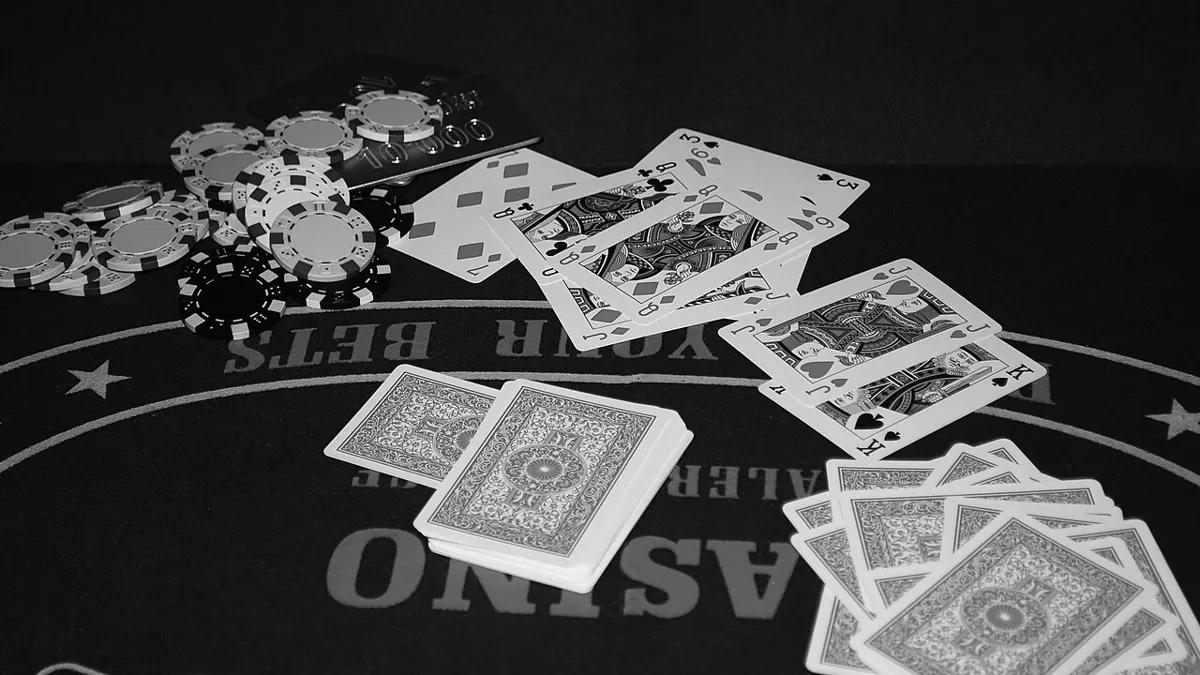
Kung gusto mo ng table game na mabagal, chill, at hindi ka agad nauubos, pai gow poker ang isa sa pinaka-underrated na laro sa online casino. Around 4 out of 10 hands end in a push, so your money lasts longer than in most card games. Pero hindi ibig sabihin na libre ito: there's a 5% commission and a built-in house edge, and many players hand back even more by setting their cards badly.
This guide is for Filipino players looking at pai gow poker online for real money. We'll explain the rules in plain English (with some Taglish), show you how to split your seven cards into a five-card and a two-card hand, go through the "house way", give you the real odds from published math, and turn those numbers into pesos per hour so you know what a session actually costs. Parang kuya na nagpapaliwanag bago ka umupo sa mesa.
18+/21+. Crypto only. Ad: we may earn a commission. Play responsibly. October 2026

What is pai gow poker?
Pai gow poker is a casino card game based on the old Chinese tile game pai gow, but played with a regular deck of cards and poker hand rankings. It became a casino table game in the United States in the 1980s and is now offered by many online casinos as an RNG (computer-dealt) table game, and sometimes as a live dealer game.
The idea is simple. You and the dealer each get seven cards. You split yours into two hands: a five-card high hand (the "back" hand) and a two-card low hand (the "front" hand, also called the "hair" or "small" hand). Your high hand plays against the dealer's high hand, and your low hand plays against the dealer's low hand. To win, you have to beat the dealer in both.
Unlike regular poker, you're not playing against other players and there's no bluffing. It's you versus the banker, just like baccarat or blackjack. If you already know basic poker hand rankings from online poker or video poker, you're already halfway there.
Pai gow poker rules, step by step
Rules can vary slightly from one game to another, so always open the game's help screen first. These are the standard rules used by most versions, as described by the Wizard of Odds pai gow poker guide:
- The deck: one standard 52-card deck plus one joker, so 53 cards in total.
- The joker is semi-wild: it can be used as an ace, or to complete a straight, flush, straight flush or royal flush. It cannot be just any card. For example, it won't turn a pair of 7s into three 7s.
- The deal: after you place your bet, you and the dealer each get seven cards.
- Set your hand: split your seven cards into a five-card high hand and a two-card low hand.
- The big rule: your five-card hand must rank higher than your two-card hand. If it doesn't, that's a "foul" and you lose. Most online games simply won't let you set a fouled hand, which is helpful.
- Dealer sets their hand: the dealer reveals their cards and sets them according to fixed rules called the house way.
- Compare: high hand vs high hand, low hand vs low hand.
- Ties (called "copies") go to the banker. If your low hand is A-K and the dealer's low hand is also A-K, the dealer wins that hand.
How you win, push or lose
| Your high hand | Your low hand | Result | On a ₱1,000 bet |
|---|---|---|---|
| Wins | Wins | You win (even money minus 5% commission) | +₱950 |
| Wins | Loses or ties | Push (bet returned) | ₱0 |
| Loses or ties | Wins | Push (bet returned) | ₱0 |
| Loses or ties | Loses or ties | You lose | -₱1,000 |
That 5% commission is the house's main way of making money, along with the rule that ties go to the banker. Some online versions are "commission-free" and use a different rule instead (for example, a certain dealer hand becomes a push). Don't assume commission-free means cheaper. Read the rule and compare.
Hand rankings in pai gow poker
The five-card hand uses normal poker rankings. The two-card hand can only be a pair or high cards, so A-A is the best possible low hand and 3-2 is close to the worst.
| Five-card hand (best to worst) | Example |
|---|---|
| Five aces (four aces + joker) | A A A A + Joker (only in games that allow it) |
| Royal flush | A K Q J 10, same suit |
| Straight flush | 9 8 7 6 5, same suit |
| Four of a kind | Q Q Q Q 4 |
| Full house | 8 8 8 3 3 |
| Flush | Any 5 cards of the same suit |
| Straight | 5 cards in a row, any suits |
| Three of a kind | 7 7 7 K 2 |
| Two pair | J J 4 4 9 |
| One pair | 10 10 A 6 3 |
| High card | A Q 8 5 3, no pair |
One quirk to watch: in many casino versions, A-2-3-4-5 (the "wheel") is ranked as the second-highest straight, just below A-K-Q-J-10. Other games treat it as the lowest straight. The help screen will tell you which rule applies.
The real odds: how often you win, push and lose
Here is where pai gow poker gets interesting. Because you need to win both hands to win the bet, and lose both to lose it, a huge share of hands end in a push. The Wizard of Odds has calculated the exact outcome probabilities for the standard game with a 5% commission. When the dealer is the banker and you set your cards the house way, the numbers are:
| Outcome | Probability (house way, dealer banks) | Probability (optimal strategy, dealer banks) |
|---|---|---|
| Win | 29.12% | 29.25% |
| Push | 40.50% | 40.45% |
| Loss | 30.38% | 30.30% |
| House edge | 2.72% | 2.51% |
Source: Wizard of Odds, pai gow poker analysis (standard rules, 5% commission, dealer banking). Your game's exact numbers can differ slightly with different house way rules or a commission-free variant.
Two things jump out. First, you lose slightly more often than you win, and on top of that your wins are cut by 5%. That's where the edge comes from. Second, the gap between playing the house way and playing perfectly is small, only about 0.2%. Ibig sabihin, you don't need to memorize a huge strategy chart. Follow the house way and you're already very close to the best possible result.
What pai gow poker costs per hour, in pesos
A house edge of 2.72% means that, on average over many hands, you lose about ₱2.72 for every ₱100 you bet. To see what that means for a real session, multiply your bet by the number of hands per hour. The figures below are averages calculated from the house way edge; actual sessions swing up and down a lot.
| Bet per hand | Hands per hour | Total wagered | Expected cost (house way, 2.72%) | Expected cost (optimal, 2.51%) |
|---|---|---|---|---|
| ₱200 | 40 | ₱8,000 | about ₱218 | about ₱201 |
| ₱500 | 40 | ₱20,000 | about ₱544 | about ₱502 |
| ₱500 | 80 | ₱40,000 | about ₱1,088 | about ₱1,005 |
| ₱1,000 | 60 | ₱60,000 | about ₱1,633 | about ₱1,507 |
Notice how the hands-per-hour number matters as much as the bet size. A live dealer table might deal 30 to 40 hands an hour. An RNG version on your phone can easily do double that if you click fast. Same game, same edge, but twice the cost per hour. Kaya chill lang. Pai gow is meant to be slow.
For comparison, at ₱500 a hand for 40 hands, a baccarat banker bet (house edge about 1.06%) would cost about ₱212 on average, and a player bet (about 1.24%) about ₱248. So pai gow poker is not the cheapest table game per peso wagered. What it gives you instead is low volatility: lots of pushes, slow swings, and a longer session from the same bankroll. If your goal is entertainment time, that trade can make sense. If your goal is the lowest edge, look at our banker vs player odds guide.
How to set your hand: the simple version
Setting your hand is the only real decision in pai gow poker. The goal is to make both hands strong enough to win, not to make the strongest possible five-card hand. A monster high hand with a weak low hand often just pushes. Here's a simple approach that stays close to the house way for most hands:
No pair
Put your highest card in the five-card hand, and your second and third highest cards in the two-card hand. Example: with A-K-J-9-7-5-3, keep the ace in the back and play K-J in front.
One pair
Keep the pair in the five-card hand, and put your two highest remaining cards in front. Example: 8-8 with A-Q-10-6-2: high hand 8-8-10-6-2, low hand A-Q.
Two pair
This is the most common decision that people get wrong. As a rough rule:
- If you have an ace as a single card, usually keep both pairs together in the high hand and put the ace plus the next highest card in front.
- If one pair is high (jacks or better) or both pairs are medium-high, split them: big pair in the back, small pair in the front.
- If both pairs are small (sixes and below) and you have a decent high card, many house ways keep them together.
Exact rules differ between casinos. When in doubt, use the game's "House Way" or "Auto Set" button if it has one and compare it with what you were going to do. That's a free lesson every hand.
Three pair
Always play the highest pair in front. With K-K, 9-9 and 4-4, put K-K in the two-card hand and 9-9-4-4 in the back. Two pair behind and a high pair in front gives you a strong chance of winning both.
Three of a kind
Usually keep the trips together in the back. The big exception is three aces: most house ways split them, keeping a pair of aces in the back and one ace in front with your next highest card.
Straights and flushes
If you have a straight or flush, keep it in the back unless you can also make a pair (or a high pair) in front by breaking it. With a flush plus a pair, players often play two pair or a pair in the back and use the remaining high cards in front. If the pair is big, using it to strengthen the back can be better. Check the house way or auto-set when unsure.
Full house
Usually split it: three of a kind in the back, the pair in front. Exceptions exist when the pair is very small and you have an ace and king to play in front instead.
Four of a kind
It depends on the rank. Low quads (2s to 6s) usually stay together. With medium or high quads, many strategies split them into two pairs, one in each hand, especially if you don't have an ace or a pair to play in front.
Worked example: setting a real hand (made up for illustration)
Let's say you're dealt: Q♠ Q♥ 7♣ 7♦ A♠ 9♣ 3♦. That's two pair (queens and sevens) plus a single ace.
Option 1: keep both pairs in the back: Q-Q-7-7-3 in the five-card hand, A-9 in front. Your high hand is strong two pair, and your low hand is ace-high, which beats a lot of dealer low hands.
Option 2: split the pairs: Q-Q-A-9-3 in the back, 7-7 in front. A pair of sevens in front is strong, but now your high hand is just one pair of queens.
Most house ways play option 1 here because of the single ace: two pair plus an ace-high front is a solid balance. Without the ace, splitting would get a lot more attractive. This hand is a made-up example to show the thinking, not a promise that one option wins.
18+/21+. Crypto only. Ad: we may earn a commission. Play responsibly. October 2026
Banking: the rule you'll rarely see online
In land-based casinos, players can sometimes take a turn being the "banker". When you bank, you play against the dealer and the other players, and ties go to you. The Wizard of Odds figures show the house edge dropping from about 2.72% to about 0.25% when the player banks using the house way. That's a big difference.
Online, though, banking is usually not available. RNG pai gow poker games almost always have the dealer bank every hand. So when you see someone quoting a "0.25% house edge", check whether they're talking about banking. For a normal online game, plan around roughly 2.5% to 2.7%.
Side bets: Fortune and other bonus bets
Many pai gow poker games add a side bet, often called "Fortune", "Bonus" or "Envy". These pay based on how strong your seven cards are (for example, a straight or better), and some pay big amounts for a seven-card straight flush or five aces.
The catch: side bets in table games almost always carry a much higher house edge than the main bet. Different pay tables give very different returns, and we can't give you one number that fits every game. Our honest advice: if you want to play the side bet, keep it small compared with your main bet and treat it as a lottery ticket, not part of the strategy. Ang main bet ang "matipid", hindi ang side bet.
Pai gow poker vs other table games
| Game | Typical house edge (main bet) | Pace / volatility | Skill involved |
|---|---|---|---|
| Pai gow poker (house way, dealer banks) | about 2.72% | Slow, very low volatility (about 40% pushes) | Low to moderate (setting hands) |
| Baccarat banker | about 1.06% | Fast, low volatility | None |
| Baccarat player | about 1.24% | Fast, low volatility | None |
| Video poker (good pay table, good strategy) | under 1% on the best games | Fast, medium volatility | Moderate to high |
| Slots | commonly 3% to 6% (RTP 94% to 97%) | Very fast, high volatility | None |
Figures are common published averages and vary by game and rules. Read the RTP or rules page of the specific game you're playing. For slots, our slot RTP guide explains what those percentages mean.
Where to play pai gow poker online with crypto
Our main recommendation for Filipino players who want a crypto casino is Cloudbet. A quick, honest note: we have not confirmed that pai gow poker is in Cloudbet's casino lobby right now. Game lists change as providers add and remove titles. After signing up, search "pai gow" in the lobby. If it's not there, look at the poker-style table games and video poker instead.
Facts that matter from Cloudbet's own help pages and terms:
- Crypto deposits: BTC, ETH, USDT (several networks), USDC, LTC, DOGE, XRP, SOL and more. Our USDT casino guide and GCash to crypto deposit guide walk you through it.
- Welcome package: up to $2,500 over 30 days, activated by your first deposit, including casino rakeback of 10% of the house edge. On pai gow poker at about 2.72%, ₱20,000 wagered has an expected loss of about ₱544, so 10% rakeback would return roughly ₱54. Nice, but not a game-changer. See our casino rakeback explainer.
- Bonus wagering: table games often count for less (or nothing) toward bonus wagering. Check the current terms before you count on pai gow to clear anything.
- Withdrawals: typically processed within 24 hours according to Cloudbet's help article, with the network fee shown before you confirm. Our USDT to GCash withdrawal guide covers getting money back to pesos.
- Licensing: Cloudbet is licensed in Curaçao, not by PAGCOR. Philippine law treats online gambling not licensed by PAGCOR as illegal, so understand the risk before you play.
RNG vs live dealer pai gow poker
RNG (digital) pai gow poker is dealt by a random number generator. You can play at your own pace, there's usually an auto-set or house way button, and minimum bets are low. The downside is speed: it's very easy to play 80 or more hands an hour without noticing, which doubles your cost.
Live dealer pai gow poker uses a real dealer on video. It's slower and feels more like a real table, but it's less common online, and minimum bets are usually higher. If you find one, the slow pace actually works in your favour cost-wise.
Whichever you pick, look for these on the help screen: the deck (53 cards with a joker), whether there's a 5% commission or a commission-free rule, how the A-2-3-4-5 straight ranks, and whether the auto-set follows the house way.
Common pai gow poker mistakes
- Building the biggest five-card hand. A full house in the back with 3-2 in front is often a push. Balance wins money.
- Setting a foul hand. In a live game, putting a stronger hand in front than in back loses automatically. Online, most games block it, but double-check.
- Forgetting the commission. A ₱1,000 win pays ₱950, not ₱1,000. Count it when you set your session budget.
- Playing too fast. The edge is per hand. More hands per hour = more expected loss per hour.
- Chasing side bets. Fun, pero mahal. Keep them small.
- Thinking pushes are "free hands" to raise your bet on. Previous results don't change the next deal. There's no pattern to read.
- Using borrowed money or money for bills. No strategy changes the long-run edge.
A simple session plan (example)
Here's a made-up example of a sensible session. Mark from Cavite sets aside ₱5,000 for entertainment this month. He plays ₱100 a hand on an RNG pai gow poker game, uses the auto-set to learn the house way, and limits himself to about 50 hands an hour. His expected cost is about ₱136 an hour (₱5,000 wagered x 2.72%). Because roughly 40% of hands push, his balance moves slowly, and his ₱5,000 can comfortably cover several sessions. He also decides in advance to stop if he's down ₱2,000 in one sitting, and to stop and cash out half if he's up ₱2,000. Real results will vary, but having limits beforehand is what keeps it fun.
For more on setting limits, read our bankroll management guide.
Is pai gow poker legal in the Philippines?
Pai gow poker is played legally at PAGCOR-licensed land-based casinos in the Philippines. Online is different. Philippine law treats online gambling not licensed by PAGCOR as illegal, and offshore crypto casinos like Cloudbet are licensed in Curaçao, not by PAGCOR. You need to be 21 or older to gamble in the Philippines. Read our online poker legality guide for more on how the rules apply to poker-style games.
Play responsibly
Pai gow poker's slow pace is a strength, but it can also make long sessions feel harmless. Set a time and money limit before you start, never chase losses, and take breaks. If gambling stops being fun or you're spending money you need, call the PAGCOR helpline at (02) 8248-9568 or visit our responsible gambling page for free help and self-exclusion options.
Mga Madalas Itanong (FAQ)
Can you play pai gow poker online for real money?
Yes. Many online casinos offer RNG and sometimes live dealer pai gow poker for real money. Availability varies by casino, so search the lobby for 'pai gow' after signing up.
What is the house edge in pai gow poker?
About 2.72% for the standard game with a 5% commission when the dealer banks and you play the house way, according to the Wizard of Odds. Optimal strategy lowers it to about 2.51%.
How often do you push in pai gow poker?
About 40% of hands in the standard game end in a push, which is why the game feels slow and your bankroll lasts longer.
What is the house way in pai gow poker?
The fixed set of rules the dealer uses to split their seven cards into a high and low hand. Following the house way gets you within about 0.2% of the best possible strategy.
Why is there a 5% commission?
Winning bets pay even money minus 5%. Together with ties going to the banker, the commission is how the casino earns its edge.
Can I bank in online pai gow poker?
Usually not. Most online games have the dealer bank every hand. Banking, which can lower the house edge a lot, is mainly available in land-based casinos.
Does Cloudbet have pai gow poker?
We have not confirmed it. Game lobbies change, so search 'pai gow' in Cloudbet's casino after signing up and check the table games and video poker sections.
Ano ang pai gow poker?
Card game kung saan hahatiin mo ang pitong baraha sa five-card high hand at two-card low hand. Kailangan mong talunin ang dealer sa dalawang hand para manalo.
Paano manalo sa pai gow poker?
Walang paraan para talunin ang house edge sa long run, pero mababawasan mo ang talo kung susundin mo ang house way, hindi ka magmamadali, at iiwasan mo ang malalaking side bet.
Legal ba ang online pai gow poker sa Pilipinas?
Ang online gambling na hindi licensed ng PAGCOR ay itinuturing na ilegal sa Pilipinas. Kailangan ding 21 pataas ang edad para maglaro.
18+/21+. Crypto only. Ad: we may earn a commission. Play responsibly. October 2026
18+/21+. Crypto only. Ad: we may earn a commission. Play responsibly. October 2026
If gambling stops being fun, call PAGCOR's free 24/7 National Problem Gambling Helpline at (02) 8248-9568 (+63 2 8248 9568), or visit npgh.ph. Source: PAGCOR Responsible Gaming.